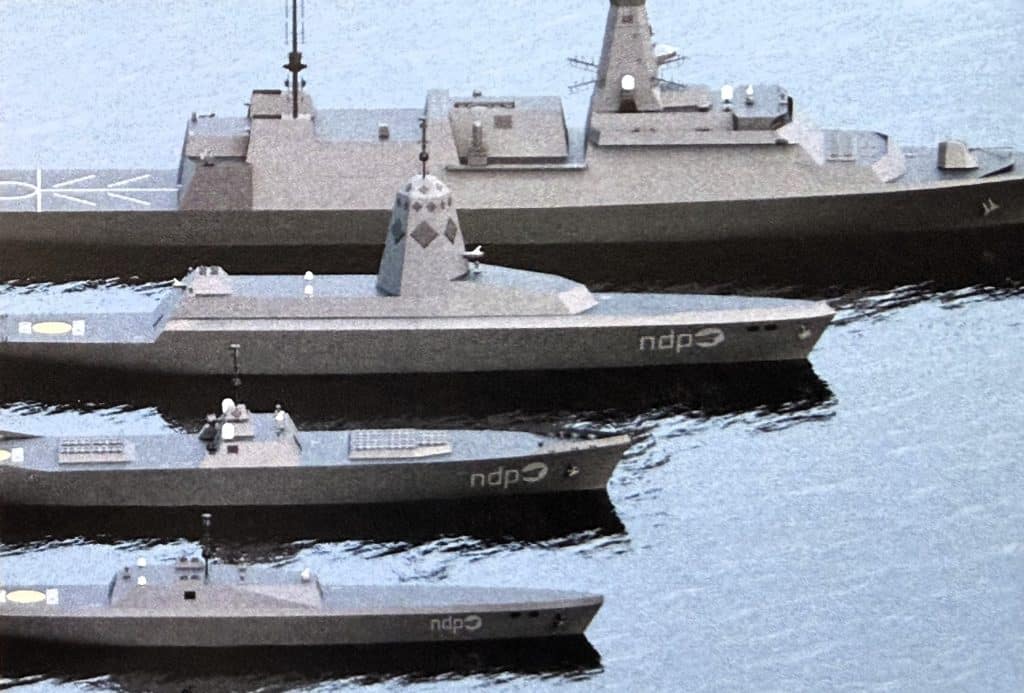
The Royal Navy (RN) has no choice but to pivot to an increasingly uncrewed and autonomous hybrid fleet if it is to achieve the lethality, survivability, persistence and mass necessary for warfighting in the North Atlantic and High North, the head of the service has said. Speaking at the Defence Leaders Combined Naval Event (CNE) ... The post First Sea Lord insists no alternative to Hybrid Navy appeared first on Naval News .
The Royal Navy, facing the imperative for modern warfighting capabilities and cost efficiencies, is publicly committing to a pivot towards autonomous systems.
This statement signifies a clear strategic direction for one of the world's major navies, impacting global defence budgets, procurement, and naval doctrines.
The explicit acknowledgment that there is 'no alternative' to a hybrid fleet accelerates the shift towards unmanned naval systems as a core component of future maritime power.
- · Unmanned vehicle manufacturers
- · Defence software companies
- · Royal Navy's capabilities
- · North Atlantic security
- · Traditional shipbuilding industries
- · Manned vessel procurement
- · Navies slow to adapt
- · Older naval doctrines
Increased investment and R&D will flow into naval autonomous technologies and hybrid fleet architectures.
Other peer navies will accelerate their own hybrid fleet development and procurement strategies to maintain competitive advantage.
The definition of naval power and geopolitical influence will increasingly be tied to a nation's proficiency in deploying and operating sophisticated unmanned and autonomous platforms.
This signal links to a primary source. Continuum Brief monitors and indexes it as part of the live intelligence stream — we do not republish source content.
Read at Naval News