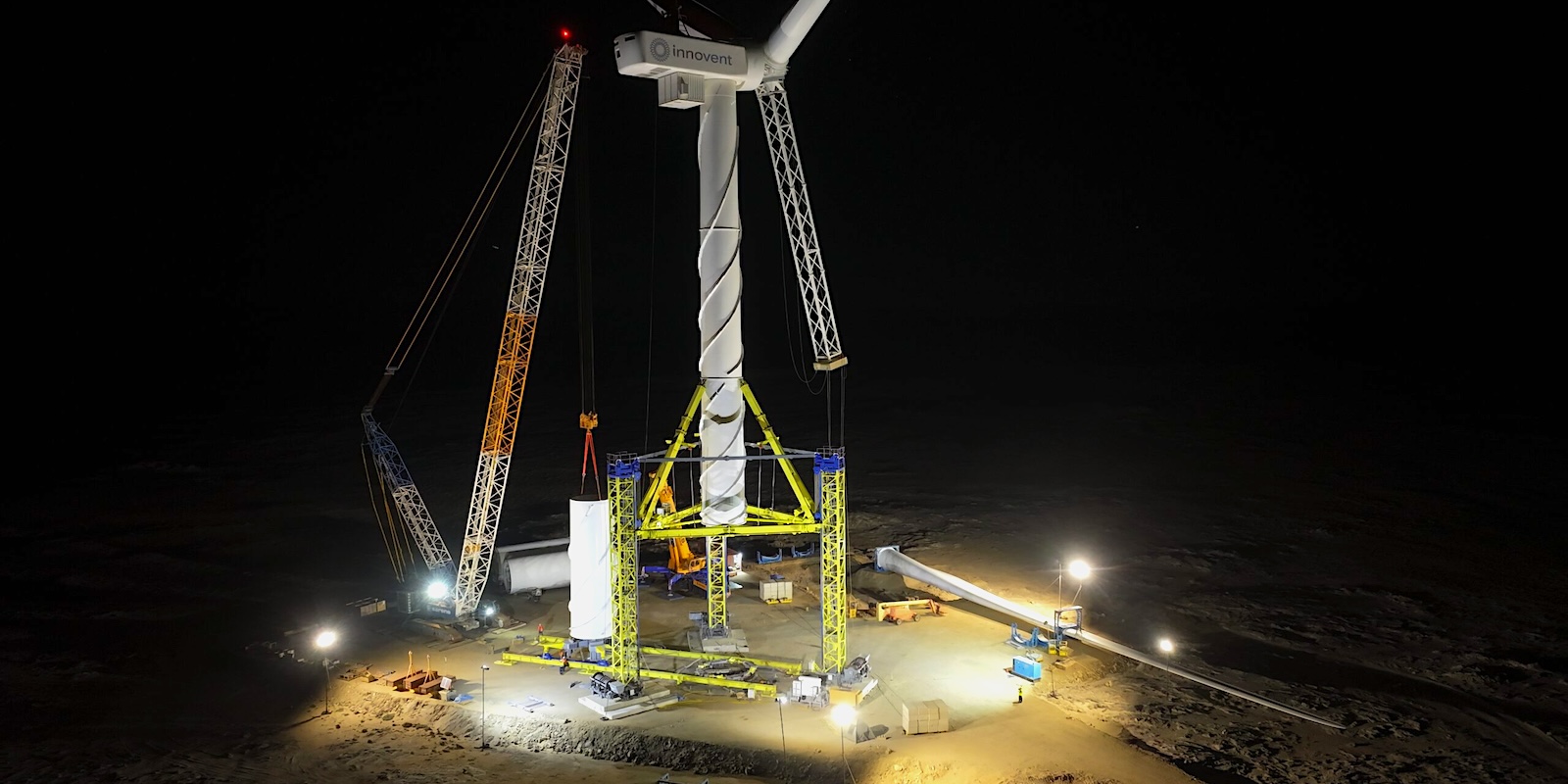
Fortescue ‘s recently-acquired turbine subsidiary Nabrawind has done something that was believed to be impossible: they’ve installed a full-scale, energy producing wind turbine in harsh Namibian conditions using a new, crane-less deployment process. more…
Ongoing global efforts towards renewable energy deployment are driving innovation in installation methods, particularly in challenging environments where traditional heavy infrastructure is cost-prohibitive or impractical.
This development significantly lowers the barrier to entry for wind energy projects in remote or logistically difficult locations, accelerating renewable energy adoption and potentially creating new markets.
The ability to deploy large-scale wind turbines without heavy-lift cranes alters the economic and logistical feasibility of wind power development, expanding accessible geographies.
- · Renewable energy developers
- · African nations
- · Nabrawind
- · Remote communities
- · Traditional heavy-lift crane manufacturers
- · Grid-dependent energy providers
Reduced capital expenditure and faster deployment times for wind energy projects will be observed.
Increased energy independence and local economic development for regions previously deemed unsuitable for large-scale wind power becomes possible.
This innovation could lead to broader adoption of modular and crane-less construction techniques across other infrastructure sectors, further decentralizing development capabilities.
This signal links to a primary source. Continuum Brief monitors and indexes it as part of the live intelligence stream — we do not republish source content.
Read at Electrek