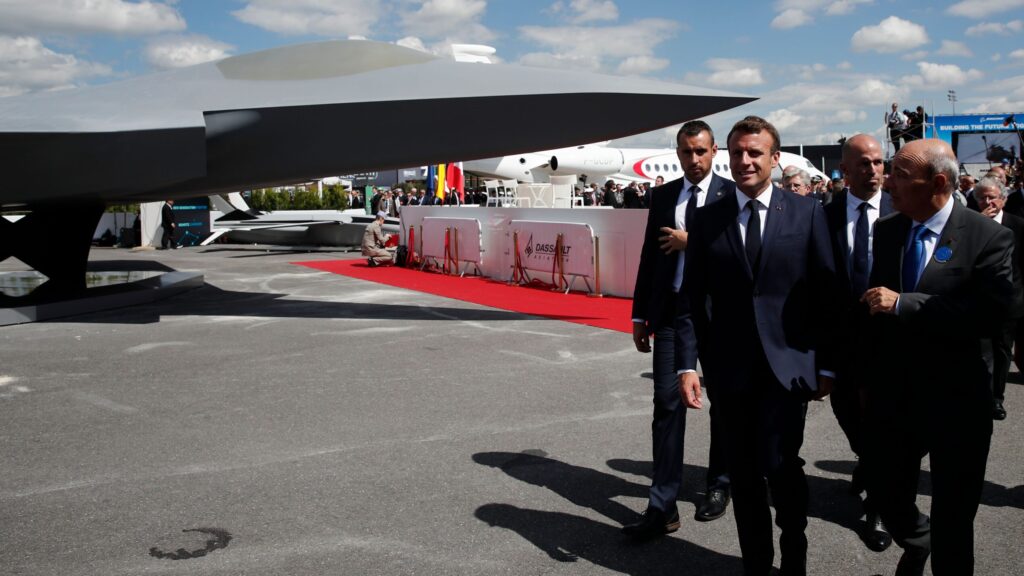
The German Chancellor, Friedrich Merz, would have proposed that the two nations, along with Spain, which is also involved as a partner, continue to jointly develop the so-called combat cloud communication network.
The perennial difficulties in aligning national interests and industrial priorities among European defense partners have reached a breaking point amidst increasing geopolitical tensions and the urgency for next-gen capabilities.
The dissolution of large-scale joint defense projects like FCAS highlights the fragmentation of European defense efforts and accelerates nationalistic approaches, potentially impacting future interoperability and technological sovereignty.
Key European nations, particularly France and Germany, will likely pursue independent or smaller-scale bilateral development of advanced fighter capabilities, leading to duplicated efforts and increased costs.
- · Dassault
- · Airbus Defence & Space (remaining programs)
- · US defense contractors (as an alternative for sophisticated European buyers)
- · European defense integration
- · FCAS program
- · Spain (as a junior partner)
The 'combat cloud' communication network, initially part of FCAS, may proceed as a separate, more focused trilateral project.
France may accelerate its independent Future Combat Air System (SCAF) and seek more focused partnerships, potentially with Italy or the UK.
This failure could embolden proponents of a more unified EU defense procurement agency to overcome national industrial interests, though practical implementation remains highly challenging.
This signal links to a primary source. Continuum Brief monitors and indexes it as part of the live intelligence stream — we do not republish source content.
Read at Breaking Defense