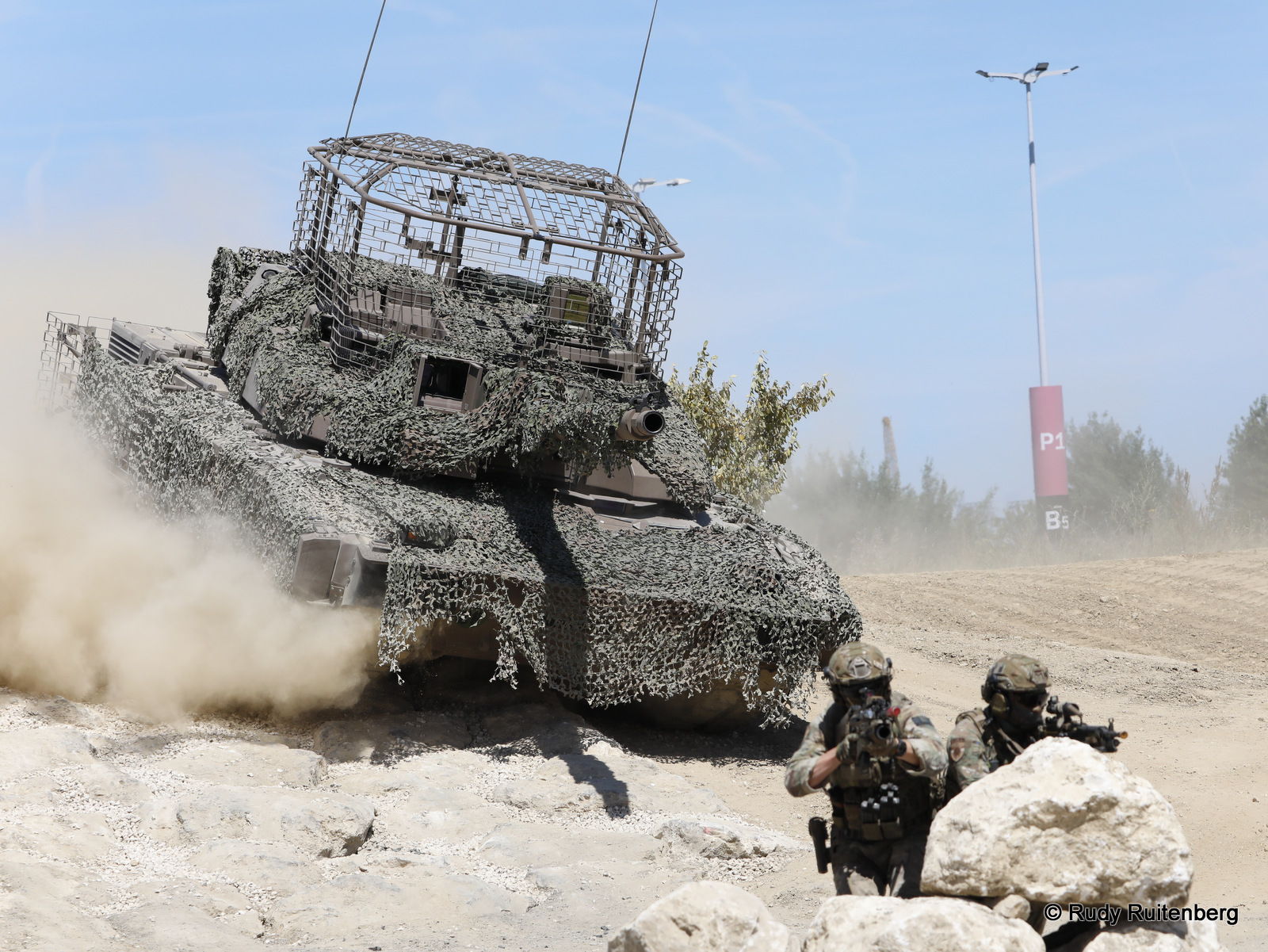
Once derided as primitive, roof-mounted armor variants have been adopted by both Russian and Ukrainian forces as drone threats proliferate.
The rapid proliferation and battlefield effectiveness of cheap drones in conflicts like Ukraine have forced modern armies to quickly adapt their traditional hardware for asymmetric threats.
This highlights the immediate and tangible impact of drone warfare on established military doctrines and equipment design, forcing even advanced militaries to adopt seemingly 'primitive' countermeasures.
The prior disdain for simple anti-drone measures on advanced tanks has evaporated, with even sophisticated Western militaries now integrating them, signifying a fundamental shift in immediate threat assessment for armored vehicles.
- · Defence Tech (integrated drone countermeasures)
- · Short-range air defence (C-UAS)
- · Military vehicle modification/retrofit companies
- · Traditional tank design paradigms
- · Forces not adapting to drone prevalence
Further integration of active protection systems (APS) and electronic warfare (EW) for drone defence on all new and existing armored vehicles will become standard.
There will be increased demand for modular, rapidly deployable, and multi-layered counter-drone solutions, influencing future military procurement and R&D budgets.
This adaptation could pave the way for a new class of 'hybrid' armored vehicles designed from the ground up with integrated layered defenses against both traditional and drone threats, accelerating the recapitalization cycle.
This signal links to a primary source. Continuum Brief monitors and indexes it as part of the live intelligence stream — we do not republish source content.
Read at Defense News