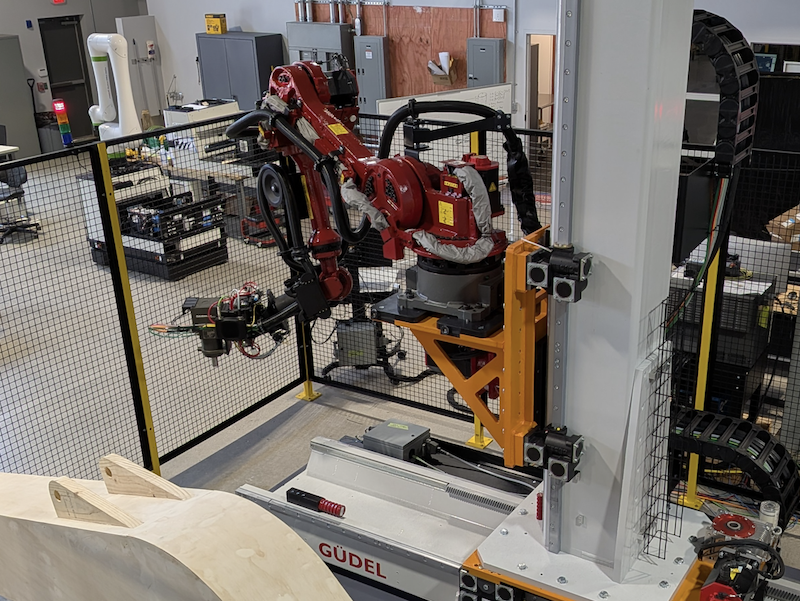
Grinding and surface finishing of fabricated parts is one of the classic 3D (Dull, Dirty, Dangerous) applications that are perfect for robot automation. Unfortunately, automating the grinding of large fabrications means multiple robots and complex part repositioning, which add significant cost and extended cycle times while introducing new sources of variation in the process. At […]
The continuous improvement in robotic capabilities and integrated motion control is making automation of 'dull, dirty, dangerous' tasks like grinding increasingly viable and efficient.
This development indicates a tangible step towards more versatile and cost-effective automation solutions, expanding the addressable market for robotics in manufacturing processes traditionally resistant to full automation.
Traditional complex and costly multi-robot grinding setups are being challenged by integrated, simpler systems that reduce cycle times and variation, leading to broader industrial adoption.
- · Industrial automation sector
- · Manufacturers adopting robotic grinding
- · Robotics companies
- · Manual grinding labor
- · Companies unable to automate
- · Inefficient multi-robot integrators
Increased uptake of robotic grinding solutions in various manufacturing sectors.
Reduced production costs and improved consistency for fabricated parts across industries.
Potential for reshoring manufacturing of goods where labor costs for finishing were previously prohibitive.
This signal links to a primary source. Continuum Brief monitors and indexes it as part of the live intelligence stream — we do not republish source content.
Read at Robotics & Automation News