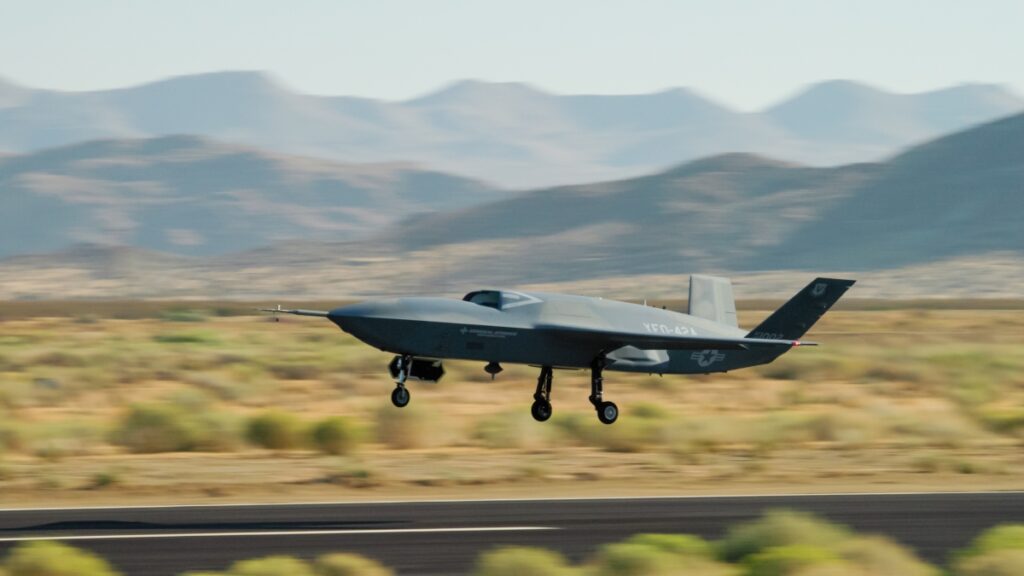
Air Force Col. Timothy Helfrich said the response to the drone’s April 6 crash “validates our approach to accept acquisition/test risk instead of operational risk allowing us to accelerate the program towards fielding.”
The successful return to flight of General Atomics' CCA drone after a crash validates the Air Force's aggressive acquisition strategy, allowing for rapid testing and iteration in drone development.
This event demonstrates the US military's willingness to accept development risk to accelerate the fielding of advanced autonomous combat aircraft, crucial for future peer competition.
The Air Force is now more confident in its expedited drone acquisition and testing approach, potentially shortening timelines for deploying collaborative combat aircraft.
- · General Atomics
- · Anduril
- · US Air Force
- · Defence Tech
- · Traditional defence contractors with slow development cycles
- · Adversaries relying on technological stagnation
The rapid development and deployment of CCA drones will accelerate.
This approach will likely be replicated across other defense technology programs, fostering a more agile defense industrial base.
The proliferation of advanced, autonomously operating drones on the battlefield changes tactical and strategic considerations for air warfare globally.
This signal links to a primary source. Continuum Brief monitors and indexes it as part of the live intelligence stream — we do not republish source content.
Read at Breaking Defense