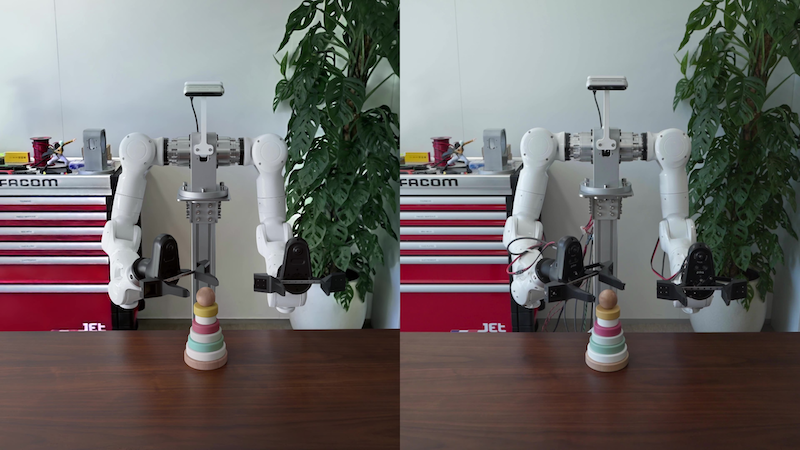
Genesis AI has launched Genesis World 1.0, a new robotics simulation platform designed to dramatically reduce the time required to develop, test, and evaluate robotic AI systems. The company says the platform can compress robotics evaluation cycles from days to minutes by enabling large-scale testing in photorealistic virtual environments rather than relying solely on physical […]
The rapid advancement in AI models and computational power has created an urgent need for more efficient methods to develop and deploy robotic systems.
Accelerated robotics development through simulation will significantly shorten innovation cycles, potentially democratizing access to advanced robotics and expanding its applications across various industries.
Traditional, slow, and expensive physical prototyping in robotics can now be complemented or replaced by high-fidelity virtual environments, drastically reducing time-to-market for robotic solutions.
- · Robotics developers
- · AI infrastructure providers
- · Automation industry
- · Manufacturers adopting robotics
- · Companies reliant solely on physical testing
- · Manual labor in some sectors
The speed and efficiency of developing robotic AI systems will increase substantially.
This acceleration could lead to a faster integration of autonomous robots into new economic sectors and daily life.
Widespread, rapid robotics deployment could transform labor markets and create new societal challenges and opportunities requiring policy adaptation.
This signal links to a primary source. Continuum Brief monitors and indexes it as part of the live intelligence stream — we do not republish source content.
Read at Robotics & Automation News