GENISOM AI steps into the global robotics spotlight at ICRA 2026 with real-world-ready robots
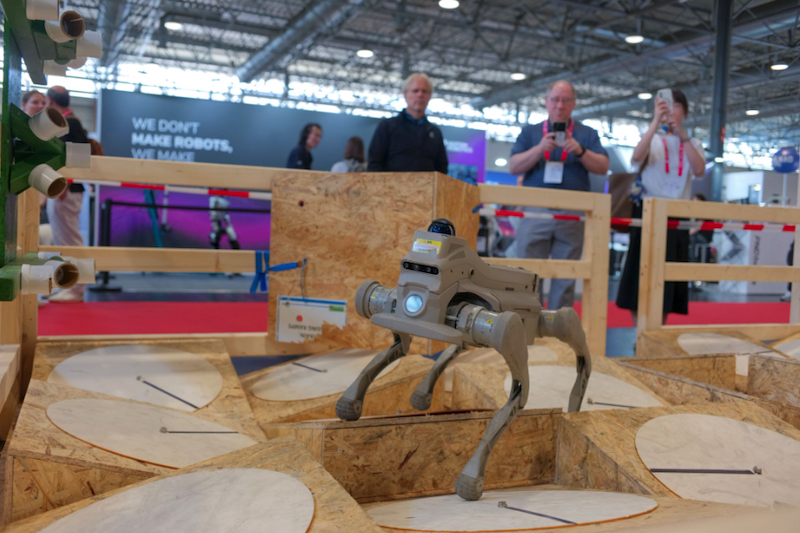
Having already produced and delivered more than 10,000 robots globally, with its products deployed in real-world industrial and infrastructure scenarios, GENISOM AI made its debut at ICRA 2026 during June 2-4 with a clear message: Embodied AI is moving from research to reality. At the event, the company demonstrated its GENISOM M1 and GENISOM L1 […]
The increasing maturity of AI and robotics technologies, coupled with the rising demand for automation in diverse industries, is driving the transition from research to real-world deployment.
This signifies a critical maturation point for embodied AI, moving it beyond academic research into practical, commercial applications that will impact industrial operations and productivity.
Embodied AI is no longer a purely theoretical or experimental field but is actively being deployed, changing how industries approach automation and potentially accelerating its integration across sectors.
- · Industrial automation sector
- · Logistics and infrastructure companies
- · AI and robotics manufacturers
- · Developing economies seeking efficiency gains
- · Companies relying on manual labor for repetitive tasks
- · Legacy automation providers slow to integrate AI
- · Countries with limited investment in AI infrastructure
Widespread adoption of AI-powered robots will lead to increased efficiency and productivity in various industrial and infrastructure sectors.
This foundational shift will necessitate significant workforce retraining and skill development to manage and interact with advanced autonomous systems.
The proliferation of embodied AI across critical infrastructure could introduce new cybersecurity vulnerabilities and ethical considerations regarding automated decision-making.
This signal links to a primary source. Continuum Brief monitors and indexes it as part of the live intelligence stream — we do not republish source content.
Read at Robotics & Automation News