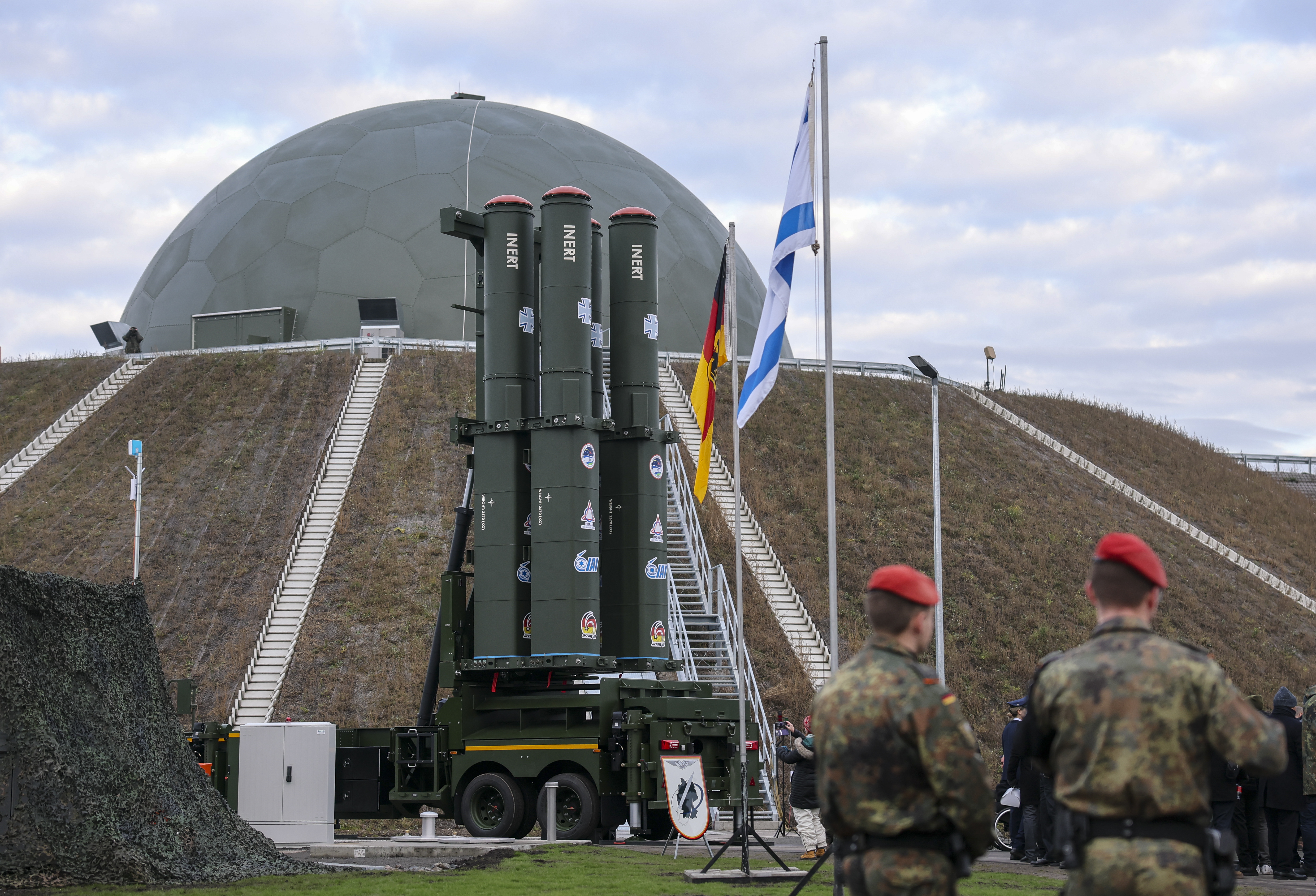
Kaufbeuren will be home to the system’s radar site, while the actual interceptor launchers for that battery are planned for nearby Fliegerhorst Lechfeld.
Amidst ongoing geopolitical tensions and a re-evaluation of national security, European nations are prioritizing robust defense capabilities, leading to rapid procurement and deployment of advanced missile defense systems.
A sophisticated reader should care because this deployment signifies a significant upgrade in Germany's and Europe's layered missile defense, enhancing strategic deterrence and reducing vulnerability to ballistic missile threats.
Germany's expanded Arrow-3 deployment enhances its multi-layered missile shield, increasing its defensive capabilities against advanced threats and contributing to a stronger collective European defense posture.
- · Germany
- · European defense industry
- · NATO
- · Israel Aerospace Industries
- · Potential aggressors
- · Tactical ballistic missile manufacturers
Germany significantly enhances its long-range missile defense capabilities through the deployment of a second Arrow-3 system.
This move prompts further investment and collaboration in integrated air and missile defense systems across European NATO members, potentially leading to a more unified European air defense architecture.
The strengthening of European missile defense capabilities could shift regional power dynamics, influencing strategic calculations of both allies and potential adversaries and potentially leading to a new arms race in defensive capabilities.
This signal links to a primary source. Continuum Brief monitors and indexes it as part of the live intelligence stream — we do not republish source content.
Read at Defense News