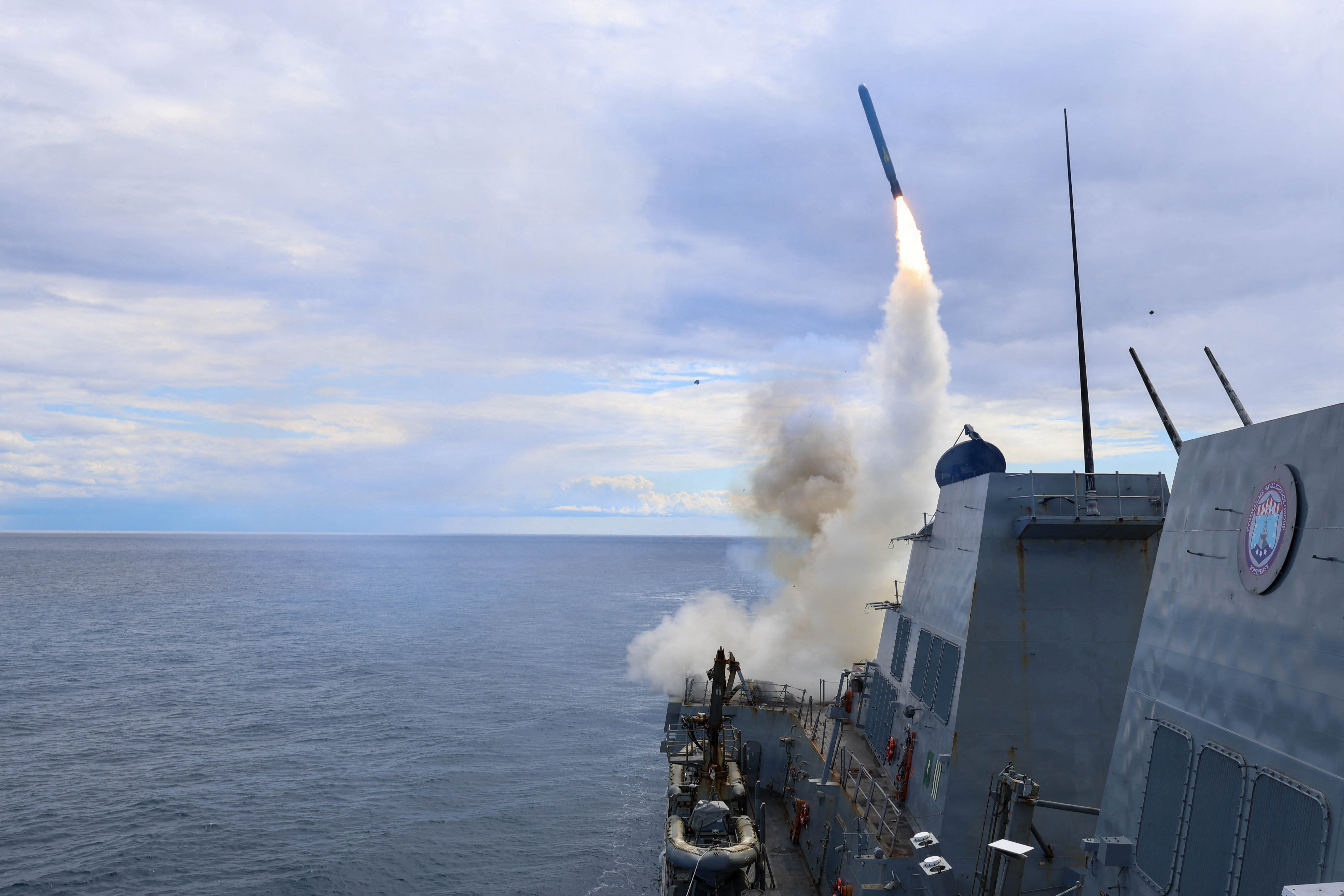
Germany will purchase Tomahawk cruise missiles from the United States and station them on German soil.
The ongoing conflict in Ukraine has exposed critical deficiencies in European long-range strike capabilities, prompting Germany and other NATO members to reassess their defense postures and invest in more robust military assets.
This acquisition represents a significant strategic shift for Germany, acquiring offensive long-range precision strike capabilities for the first time, altering its role within NATO and European security.
Germany's military doctrine and operational reach are expanded through the integration of Tomahawk missiles, moving beyond purely defensive posturing towards a more proactive security role.
- · United States defense industry
- · NATO's eastern flank defense
- · Germany's geopolitical standing
- · Russia's regional deterrence
- · German pacifist movements
Germany gains a substantial long-range strike capability, enhancing its military deterrence and strategic options.
This move likely encourages other European nations to similarly invest in long-range missile systems, potentially leading to a broader arms race or recapitalization within Europe.
A more heavily armed Germany with offensive capabilities could alter the internal power dynamics of the EU and NATO, fostering greater European military independence but also potential friction.
This signal links to a primary source. Continuum Brief monitors and indexes it as part of the live intelligence stream — we do not republish source content.
Read at Defense News