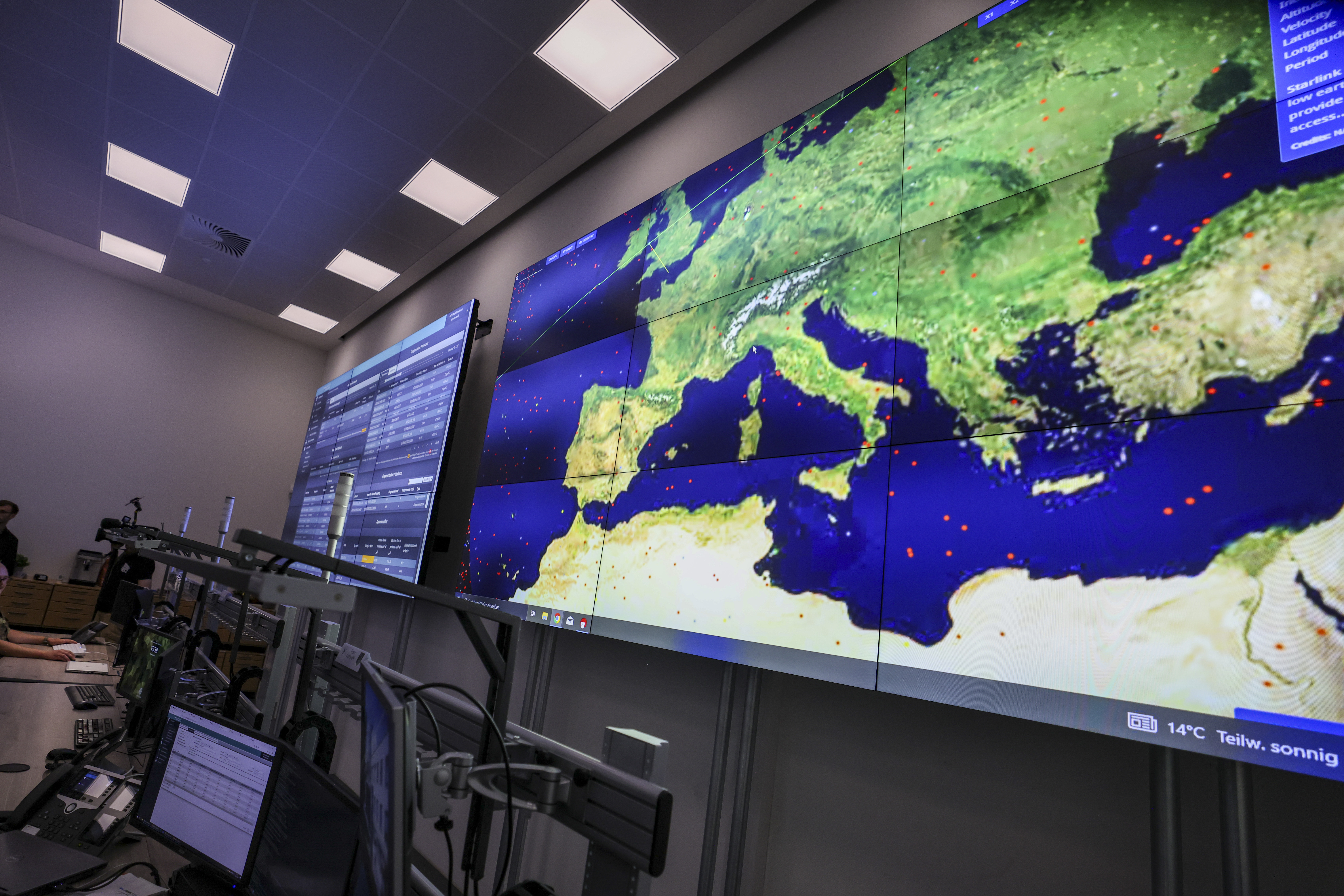
Austria’s Defense Minister Claudia Tanner reaffirmed that Austria plans to put three operationally designated military satellites into orbit next year.
European nations are increasing their efforts to develop independent defense capabilities and reduce reliance on external suppliers, particularly in critical technological domains like space.
This signifies a broader European trend towards strategic autonomy in space, which has significant implications for defense, intelligence, and economic competition, potentially shifting geopolitical power balances.
The explicit ambition for pan-German and Austrian military space capabilities demonstrates a growing European commitment to national and collective space-based defense infrastructure, indicating accelerated spending and coordination in this area.
- · European space industry
- · European defense contractors
- · Germany
- · Austria
- · US defense tech dominance
- · Commercial satellite operators currently filling defense gaps
Increased investment and development of indigenous European military satellite technology and launch capabilities.
Enhanced European intelligence gathering and communication independence, leading to more autonomous military operations.
Potential for a more fragmented global space architecture, with distinct, potentially interoperable, military space networks among allied nations.
This signal links to a primary source. Continuum Brief monitors and indexes it as part of the live intelligence stream — we do not republish source content.
Read at C4ISRNET