Going Over the Brink: How Hizballah’s Risk Strategy Made Lebanon Impossible to Ignore
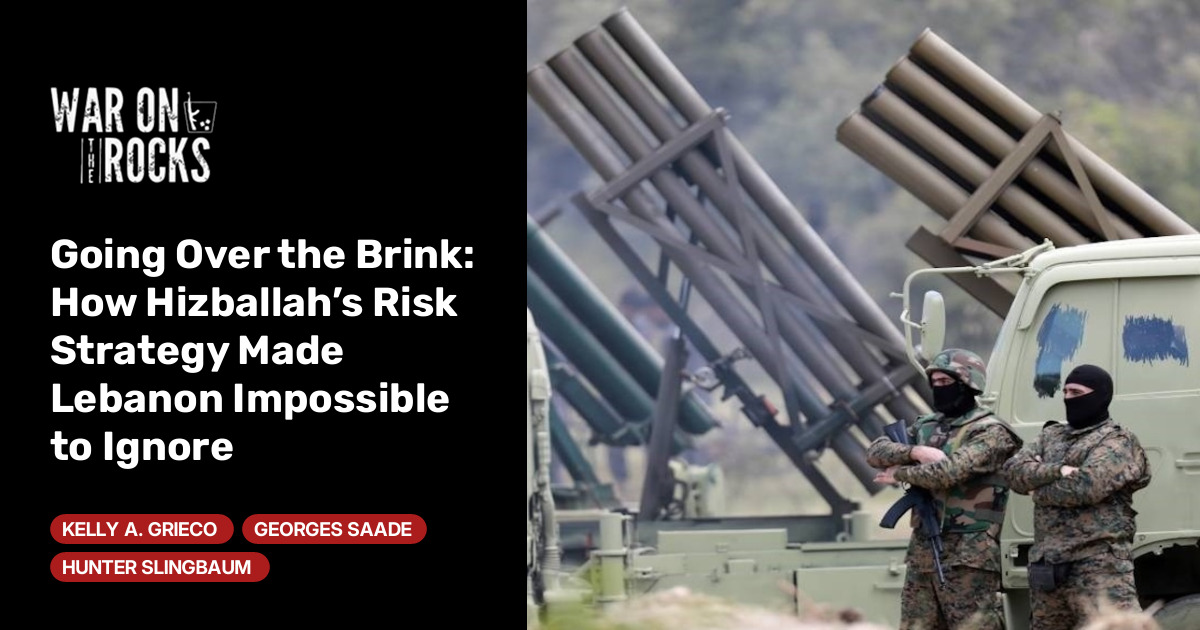
When the United States and Iran announced their framework agreement on June 15, attention focused on the direct U.S.-Iran dimensions of the deal, including the reopening of the Strait of Hormuz, the lifting of the U.S. naval blockade, and the fate of Iran’s nuclear program. But the agreement also included a commitment to the “immediate and permanent termination of military operations on all fronts, including Lebanon.” Washington had spent months treating Lebanon as a separate issue in negotiations, even as the Israel-Hizballah conflict remained active under a nominal ceasefire in place since A
The framework agreement between the United States and Iran is being announced, signaling a potential de-escalation after months of regional conflict involving Hizballah.
This event highlights the critical role of proxy conflicts in broader geopolitical negotiations and demonstrates how regional actors can significantly influence superpower decisions.
Lebanon is now explicitly included in ceasefire agreements, preventing it from being treated as a separate, ongoing conflict outside a broader U.S.-Iran deal.
- · Iran
- · United States
- · Lebanon
- · Hizballah
- · Israel
Military operations on all fronts, including Lebanon, are targeted for immediate and permanent termination.
The agreement could lead to a reassessment of regional proxies' influence on global power dynamics.
Future U.S.-Iran negotiations may explicitly integrate regional proxy activities from the outset, rather than as separate issues.
This signal links to a primary source. Continuum Brief monitors and indexes it as part of the live intelligence stream — we do not republish source content.
Read at War on the Rocks