Good Medicine Is Combat Power: Clinical Innovation and the Lessons of the Russo-Ukrainian War
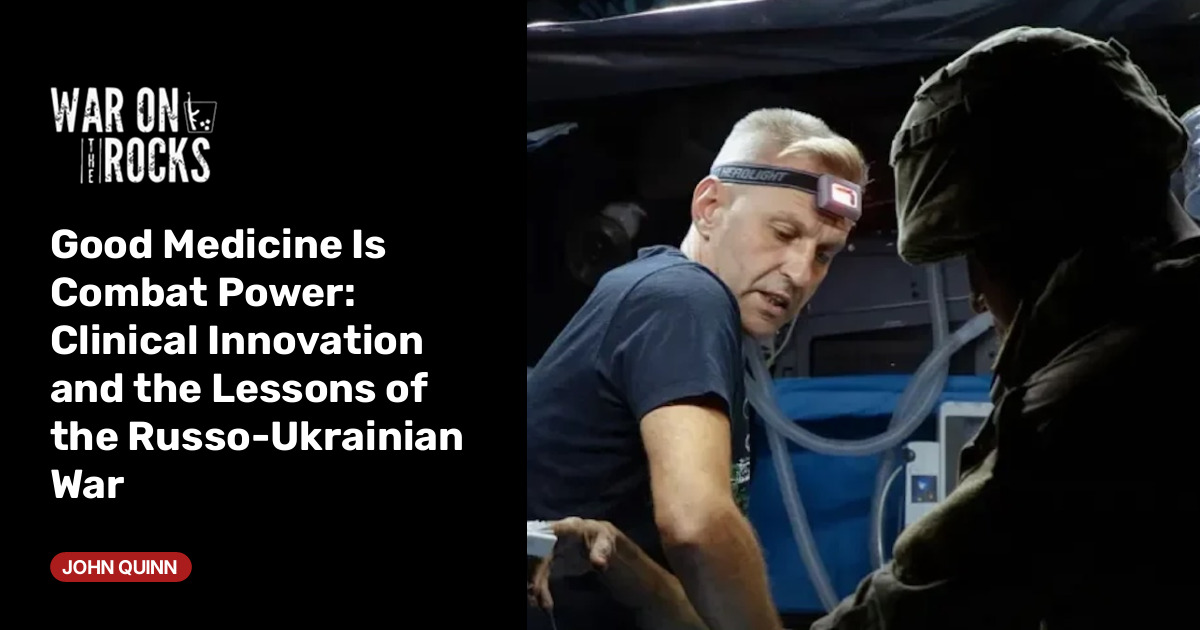
War is a brutal driver of medical innovation. Russia’s full-scale invasion of Ukraine has forced clinicians and commanders alike to confront a hard truth: Survival depends not only on tactics and technology, but on the ability to deliver advanced care under fire, evacuate and resuscitate the wounded, and preserve fighting strength despite repeated attacks on healthcare systems.Ukraine’s experience has reshaped combat medicine through necessity, resilience, and improvisation. The central question is no longer whether NATO can observe these lessons, but whether it can build a system bold enough
The ongoing Russo-Ukrainian War provides stark, real-world data on modern combat medical needs, driving immediate re-evaluation and innovation in military healthcare strategies by NATO and allied nations.
This highlights the critical role of medical readiness as a component of overall combat power, influencing military logistics, technological adoption, and training paradigms for future conflicts.
Combat medicine is shifting from a reactive support function to a proactive, integrated element of battlefield strategy, demanding rapid innovation and systemic resilience to maintain fighting strength under sustained attack.
- · Combat medical technology developers
- · Military healthcare systems
- · NATO forces
- · Defence contractors specializing in mobile medical units
- · Legacy military medical doctrines
- · Forces unprepared for dispersed or contested medical support
- · Militaries relying on slow procurement cycles
Increased investment and research in battlefield medical technologies, including autonomous evacuation and advanced trauma care.
Revision of NATO and allied military medical training, logistics, and resource allocation to incorporate lessons from the Russo-Ukrainian War.
Potential for dual-use medical innovations developed for combat to transfer to civilian disaster response and remote healthcare scenarios.
This signal links to a primary source. Continuum Brief monitors and indexes it as part of the live intelligence stream — we do not republish source content.
Read at War on the Rocks