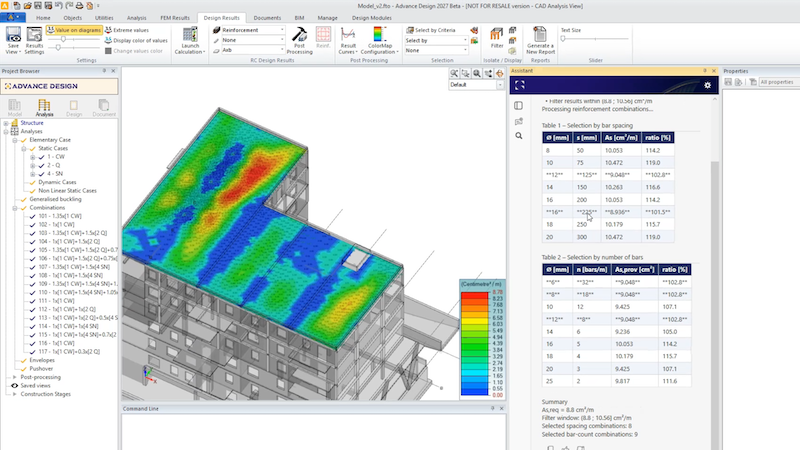
Software provider Graitec has unveiled a three-stage artificial intelligence strategy aimed at the architecture, engineering, construction and operations (AECO) sector, arguing that the industry’s biggest challenge is not generating content with AI but ensuring the results can be trusted in real-world projects. The company says it is embedding AI directly into engineering, fabrication and construction […]
As AI integration becomes inevitable across industries, the focus is shifting from basic content generation to ensuring reliability and accountability, particularly in safety-critical sectors like AECO.
A strategic reader should care because the formalization of AI accountability frameworks in AECO indicates a broader trend towards regulated AI adoption, which will influence technological development and investment priorities.
The focus on 'accountability' rather than just 'generation' marks a maturation of AI development in critical infrastructure, emphasizing trustworthiness and auditability in real-world applications.
- · Graitec
- · AECO software providers focused on verification
- · Engineering and construction firms adopting AI
- · AI assurance and auditing services
- · AI solutions lacking accountability frameworks
- · Development teams prioritizing speed over reliability
- · Traditional engineering firms slow to adopt AI standards
AI tools in AECO will increasingly integrate features for verifying outputs and tracing decision-making processes.
Industry standards and regulatory bodies will accelerate the development of guidelines for AI deployment's legal and ethical liabilities in engineering and construction.
The concept of 'AI accountability' will extend to other high-stakes sectors, creating demand for new methods of AI governance and liability assignment.
This signal links to a primary source. Continuum Brief monitors and indexes it as part of the live intelligence stream — we do not republish source content.
Read at Robotics & Automation News