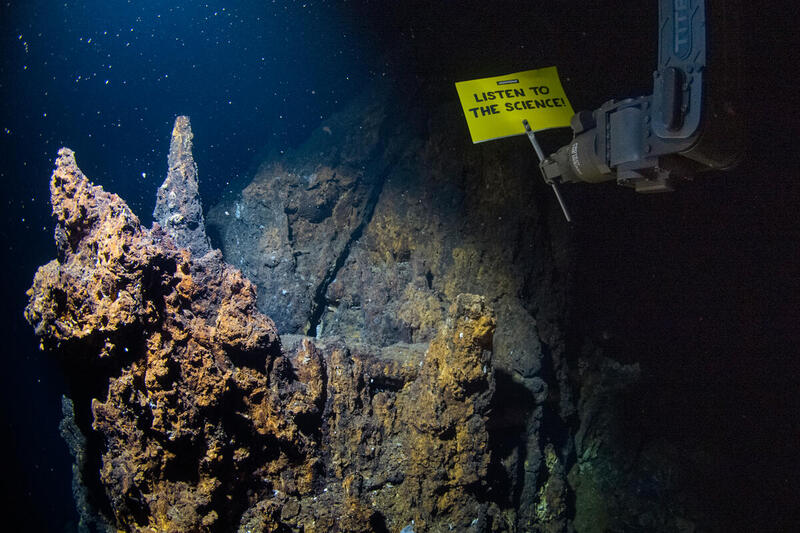
While conducting a scientific survey of vulnerable and unexplored deep-sea ecosystems along the Arctic Mid-Ocean Ridge, environmental campaign group Greenpeace deployed an underwater robot from 2,300 meters below the surface, in the deepest banner protest ever made from the seabed. The words demanding global leaders do something were: “LISTEN TO THE SCIENCE!” Dr Sandra Schöttner, […]
The deployment of autonomous underwater vehicles is becoming more sophisticated and accessible, enabling new forms of activism and exploration in challenging environments like the deep sea.
This event highlights the increasing sophistication and reach of non-state actors in utilizing advanced robotics for advocacy, and underscores growing societal pressure on environmental issues in remote areas.
The scope and methods of deep-sea environmental protest are expanding significantly, moving beyond traditional surface-level demonstrations to autonomous, deep-sea operations.
- · Environmental advocacy groups
- · Autonomous underwater vehicle manufacturers
- · Environmental monitoring technology
- · Deep-sea mining industry
- · Governments permitting deep-sea exploitation
- · Industries with high environmental impact
Increased public awareness and pressure regarding deep-sea environmental protection and climate change in the Arctic.
Potential for stricter regulations or moratoriums on deep-sea resource extraction, particularly in vulnerable ecosystems.
Escalation in sophisticated robotic counter-operations by industry or governments to monitor or deter such deep-sea protests.
This signal links to a primary source. Continuum Brief monitors and indexes it as part of the live intelligence stream — we do not republish source content.
Read at Robotics & Automation News