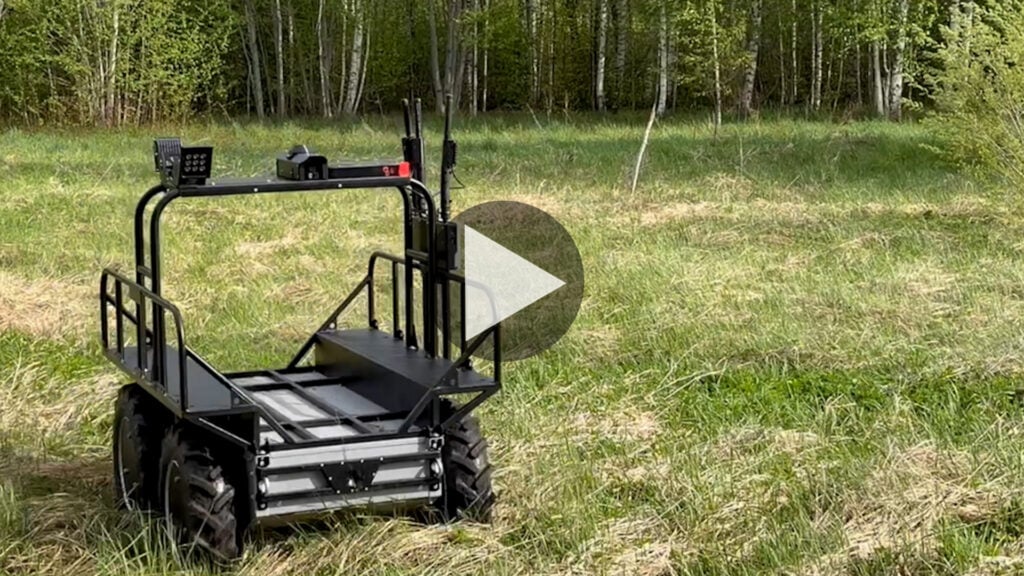
This week on The Break Out, we travel to eastern Europe for drone testing with NATO troops before briefly reviewing the history of unmanned systems.
The ongoing conflict in Ukraine is accelerating the adoption and testing of unmanned systems, pushing NATO members like Latvia to integrate these technologies rapidly.
This development highlights the urgent recapitalization of Western defense with autonomous systems, fundamentally altering future warfare and defense strategies.
Manned-unmanned teaming, especially with ground robotics and drones, is becoming a core component of NATO's operational doctrine, moving beyond experimental phases.
- · Defense contractors specializing in drones and robotics
- · NATO member states investing in autonomous capabilities
- · militaries adopting networked unmanned systems
- · Countries like Latvia hosting advanced defense R&D
- · Traditional manned military equipment manufacturers
- · Militaries slow to integrate autonomous systems
- · Nations lacking advanced robotics and AI capabilities
- · Military doctrines prioritizing large conventional forces
Increased investment in drone and ground robotics development and procurement by NATO members.
Evolution of military training and doctrine to incorporate complex manned-unmanned teaming scenarios as standard procedure.
The proliferation of advanced autonomous military technologies to smaller nations, potentially altering regional power dynamics and increasing the pace of technological warfare.
This signal links to a primary source. Continuum Brief monitors and indexes it as part of the live intelligence stream — we do not republish source content.
Read at Breaking Defense