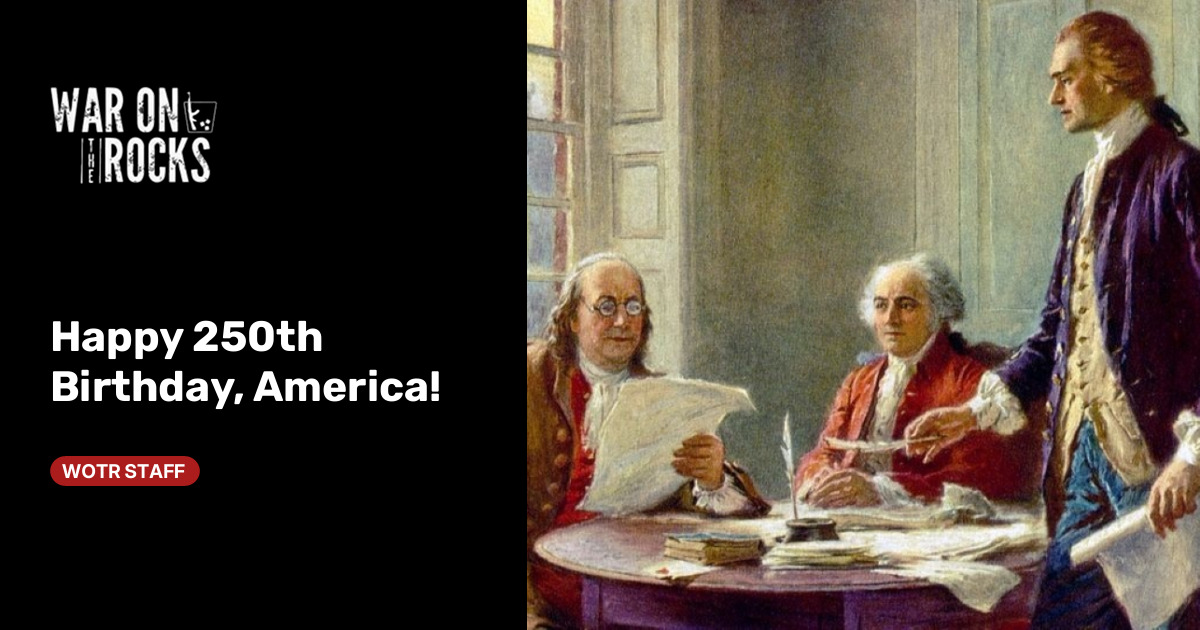
Editor’s Note: Few rivalries in American history have been as consequential — or as personal — as the one between John Adams and Thomas Jefferson. The two men could hardly have been more different. Adams, the stocky and combative Massachusetts lawyer, was blunt to a fault and quick to suspicion. Jefferson, the tall, elegant Virginia planter, was reserved and idealistic. The two held diverging political philosophies as well. Adams preferred a strong, central government while Jefferson favored states’ rights and limited government. This rift eventually led to an epic falling out, culminating in
The article is a historical commentary published on a significant national anniversary, reflecting on past political rivalries rather than current events.
This piece offers historical context on foundational American political thought but provides no new information relevant to strategic contemporary challenges or future trends.
Nothing changes as this is a retrospective historical analysis, not an update on current developments or future projections.
The article provides an historical reflection on early American political figures.
It might encourage a momentary re-evaluation of historical precedents in current political discourse.
No significant or lasting societal or geopolitical changes are anticipated from this content.
This signal links to a primary source. Continuum Brief monitors and indexes it as part of the live intelligence stream — we do not republish source content.
Read at War on the Rocks