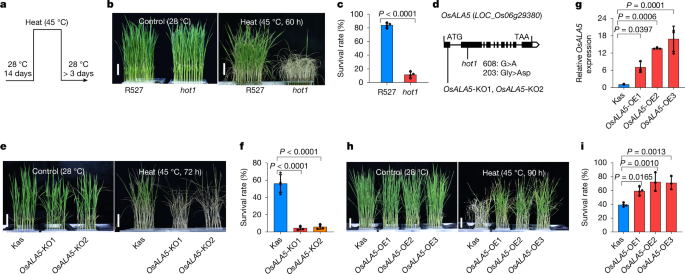
Nature, Published online: 01 July 2026; doi:10.1038/s41586-026-10726-x In rice, the P4-ATPase complex OsALA5–OsALIS2 rapidly stabilizes membrane fluidity in response to high temperature by flipping saturated phosphatidylcholines to the cytosolic leaflet of the plasma membrane.
This research provides a fundamental insight into how biological systems adapt to heat stress at a molecular level, potentially enabling new biotechnological applications.
Understanding the mechanisms of thermal adaptation in plants like rice can inform strategies for developing more resilient crops, addressing global food security challenges exacerbated by climate change.
Our understanding of plant thermotolerance is enhanced, opening avenues for genetic engineering or synthetic biology approaches to improve agricultural yields in hotter climates.
- · Agricultural biotechnology companies
- · Farmers in warm regions
- · Rice-producing nations
- · Synthetic biology researchers
- · Crop varieties sensitive to heat stress
- · Regions experiencing significant agricultural losses due to heat
Increased resilience of rice and potentially other crops to high temperatures.
Reduced pressure on food supply chains in climate-vulnerable regions.
Enhanced food security and potential shifts in agricultural economic power due to increased viability of cultivation in previously marginal lands.
This signal links to a primary source. Continuum Brief monitors and indexes it as part of the live intelligence stream — we do not republish source content.
Read at Nature — Latest Research