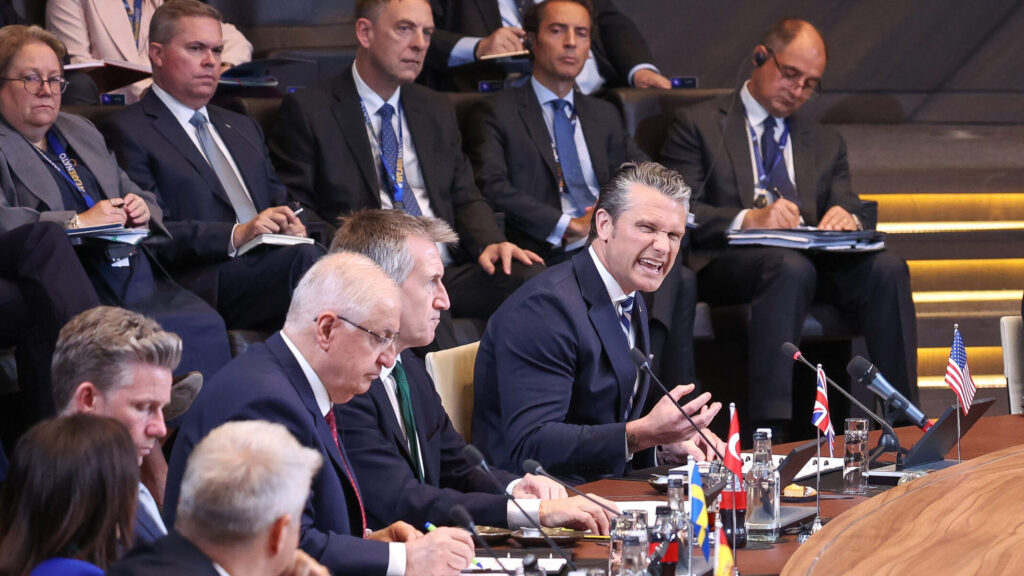
Hegseth called NATO’s response to Iran “shameful” in his comments, while also railing against social issues in Europe.
The announcement of a six-month review reflects a current administration's desire to re-evaluate military commitments and alliances, possibly driven by evolving geopolitical priorities and domestic political considerations.
A strategic reader should care because a review of US force posture in Europe could signify a significant recalibration of NATO commitments and a potential shift in the US's approach to European security, impacting alliance cohesion and burden-sharing.
The explicit criticism of NATO's response to Iran and 'social issues' by Hegseth signals a potential shift in US foreign policy rhetoric and potentially concrete changes to military deployments and strategic focus in Europe.
- · US domestic political actors advocating for reduced overseas commitments
- · Nations seeking greater autonomy in their defence strategies
- · NATO cohesion
- · European nations reliant on current US force posture for security
- · Iran (if US reduces oversight/pressure on NATO)
A six-month review will initiate a comprehensive internal assessment of military resources and strategic objectives in Europe.
This could lead to a reduction in US military presence or a demand for increased financial contributions from European allies.
Such changes might prompt European nations to accelerate independent defence integration or forge new security partnerships to fill perceived voids, potentially affecting global power balances.
This signal links to a primary source. Continuum Brief monitors and indexes it as part of the live intelligence stream — we do not republish source content.
Read at Breaking Defense