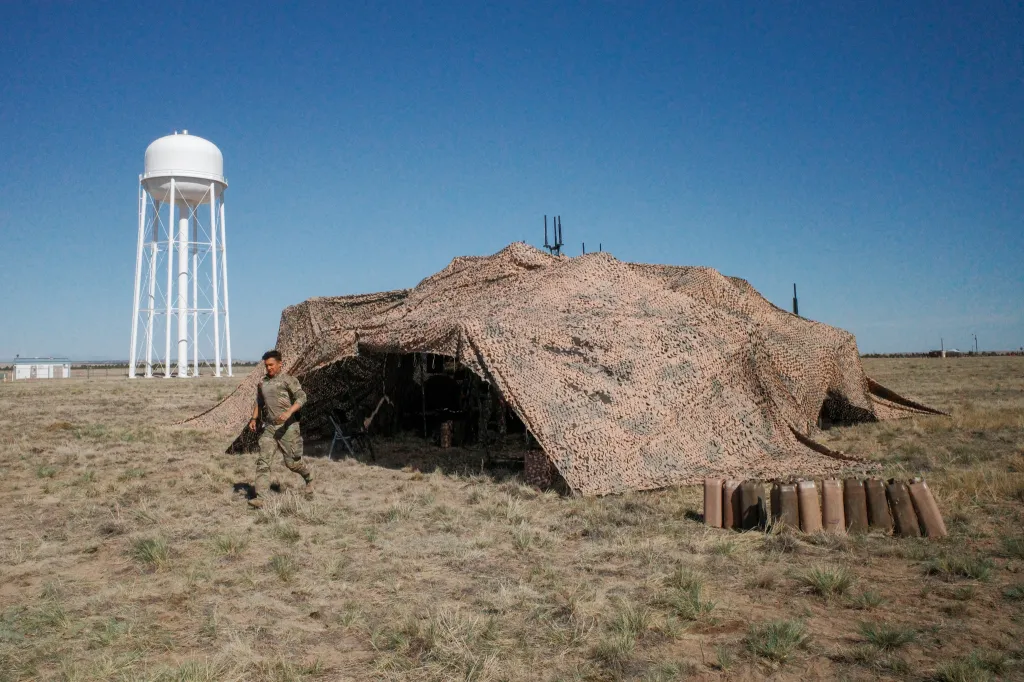
During the Global War on Terror, the Army established large, static and complicated command posts. Army officials wrote in a doctrine note earlier this year that should the service employ these types of sites against a modern adversary, it would be “suicidal.” The post Hiding in the spectrum: Inside the Army’s race to make the command post disappear appeared first on DefenseScoop .
Ongoing conflicts and evolving adversary capabilities are forcing a rapid reassessment of traditional military command and control doctrines, especially concerning electronic warfare and counter-drone measures.
This reflects a critical pivot for the US Army, moving away from static, vulnerable command structures to more agile and survivable models, essential for operating against peer or near-peer adversaries.
The emphasis on 'disappearing' command posts shifts military doctrine towards stealth, mobility, and advanced electronic warfare, fundamentally altering how future conflicts will be prosecuted on the battlefield.
- · Defence Tech companies (EW, counter-drone, stealth)
- · US Army (future force survivability)
- · Small, agile command units
- · Electronic warfare specialists
- · Traditional C2 system suppliers
- · Forces reliant on large, static command posts
- · Adversaries with anti-access/area-denial capabilities (if successful)
- · Conventional fixed infrastructure
Increased investment and R&D in advanced electronic warfare, counter-drone technologies, and spectrum management.
A wider adoption of distributed and highly mobile command structures across various military branches and allied forces.
Potential for a new arms race focused on stealth and electronic signature management, challenging existing definitions of battlefield dominance.
This signal links to a primary source. Continuum Brief monitors and indexes it as part of the live intelligence stream — we do not republish source content.
Read at DefenseScoop