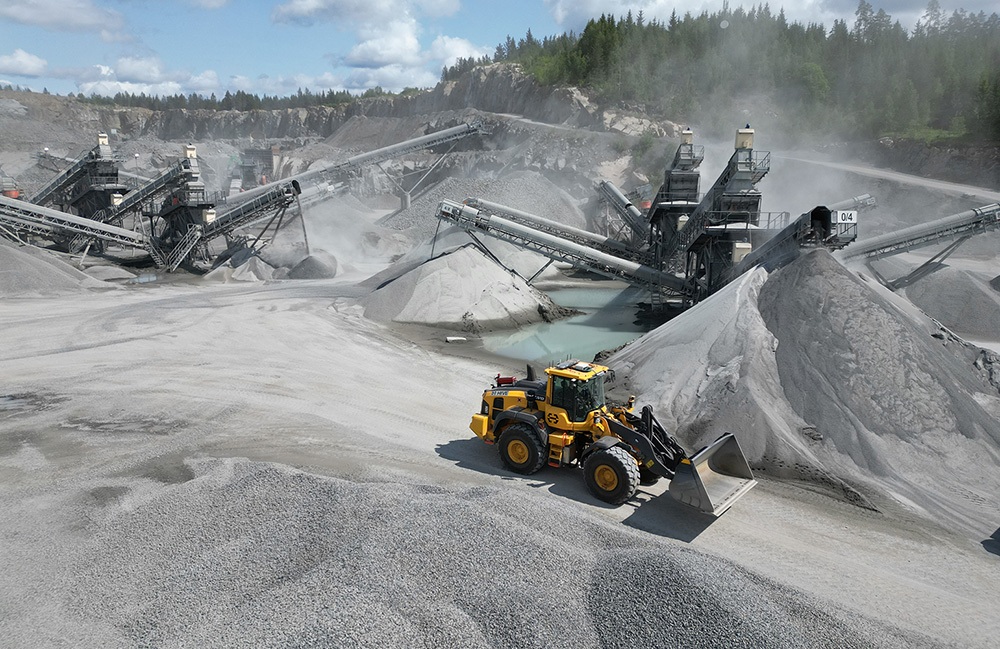
HIVE has deployed its technology across several sites in Scandinavia, operating autonomously across different machines. The post HIVE brings in $15M to build physical AI for industrial machines appeared first on The Robot Report .
The increased investment in HIVE reflects the growing maturity and demand for AI that can operate autonomously in real-world industrial settings, leveraging recent advances in robotics and AI. It aligns with the current push towards greater automation and efficiency in industrial sectors.
This development is crucial for strategic readers as it signifies the practical advancement of AI agents from theoretical models to embodied systems capable of physically interacting with environments, impacting productivity and labor across various industries. It highlights the accelerating industrial adoption of AI beyond software.
The successful deployment and funding for physical AI in industrial machines demonstrate a clear shift from primarily software-based AI to tangible, autonomous systems that can perform complex tasks in physical environments. This expansion broadens the scope and application of general AI capabilities.
- · HIVE
- · Industrial Automation Sector
- · Logistics Companies
- · Construction Sector
- · Labor-intensive industries without automation
- · Legacy industrial equipment manufacturers
- · Companies slow to adopt AI/automation
HIVE's $15M funding accelerates the development and deployment of physical AI for industrial machines, enhancing autonomy and efficiency.
Increased adoption of such systems will lead to significant productivity gains for industries across construction, manufacturing, and logistics, potentially reducing operational costs and human labor requirements.
The widespread integration of physical AI in industrial operations could reshape labor markets, necessitate new skill sets, and drive further consolidation in industries seeking high levels of automation.
This signal links to a primary source. Continuum Brief monitors and indexes it as part of the live intelligence stream — we do not republish source content.
Read at The Robot Report