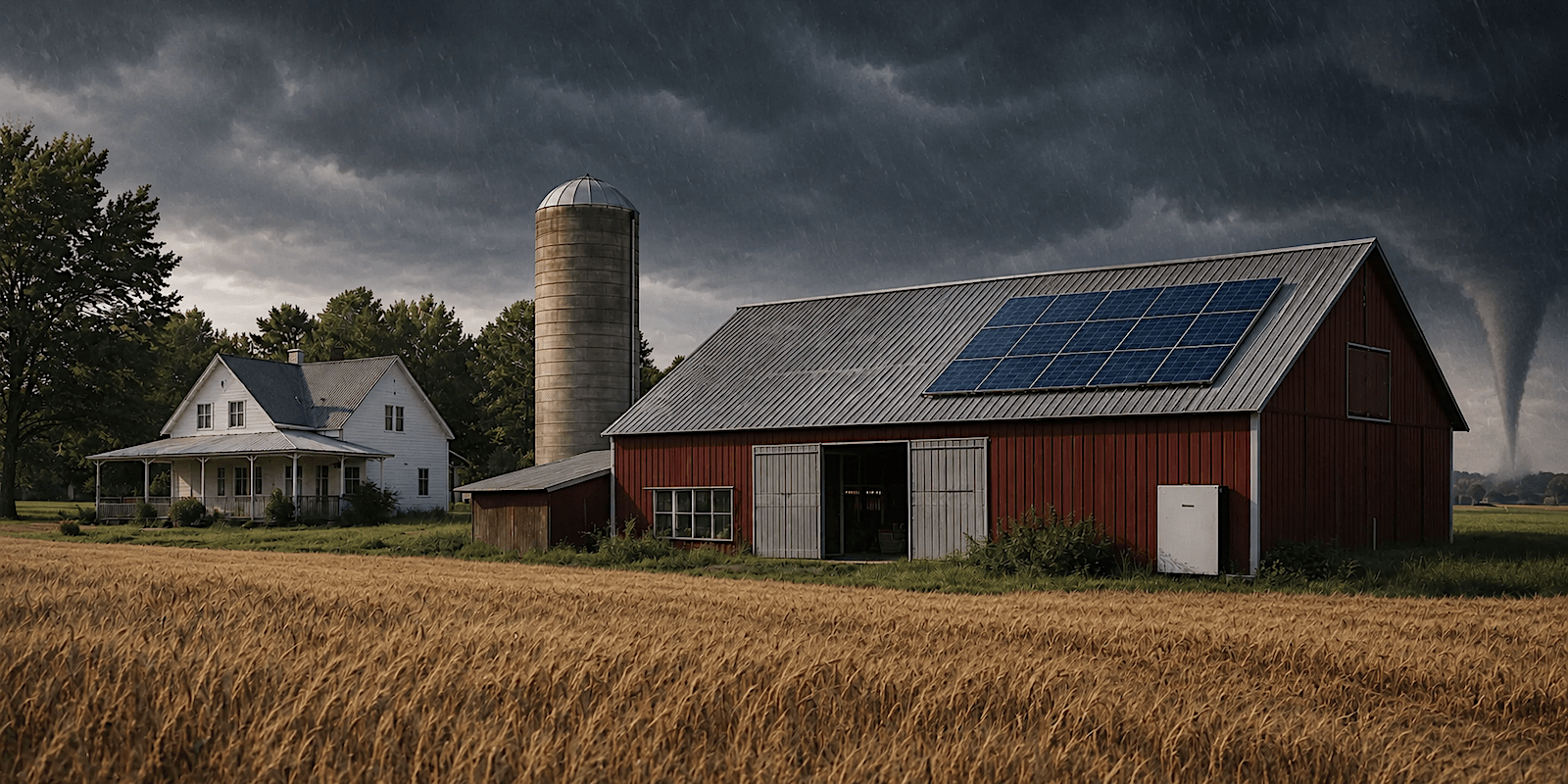
There’s no shortage of advice on how to size a home solar and battery system, but most of it assumes a suburban home with city services and outages measured in hours, not days. Rural homes play by different rules , especially during summer storms. When heavy winds take down power lines and your utility prioritizes restoring urban neighborhoods first, having a home battery isn’t about convenience — it’s about damage control.
The increasing frequency and intensity of extreme weather events, coupled with an aging electrical grid infrastructure, are making reliable power a critical concern, especially in underserved rural areas.
This highlights the growing demand for energy independence and resilience at the individual and community level, accelerating the adoption of distributed energy resources and shifting power dynamics away from centralized utilities.
The perceived value of home solar and battery systems is shifting from convenience and environmentalism to essential backup power and disaster preparedness in vulnerable regions.
- · Home battery manufacturers
- · Solar panel installers
- · Rural homeowners
- · Distributed energy providers
- · Centralized utilities reliant on traditional grid infrastructure
- · Rural communities without access to solar/battery solutions
Increased investment and innovation in resilient home energy solutions and microgrids.
New financial models and government incentives to subsidize independent power solutions for vulnerable populations.
Potential for rural communities to develop greater energy autonomy, lessening dependence on aging national grids and centralized infrastructure.
This signal links to a primary source. Continuum Brief monitors and indexes it as part of the live intelligence stream — we do not republish source content.
Read at Electrek