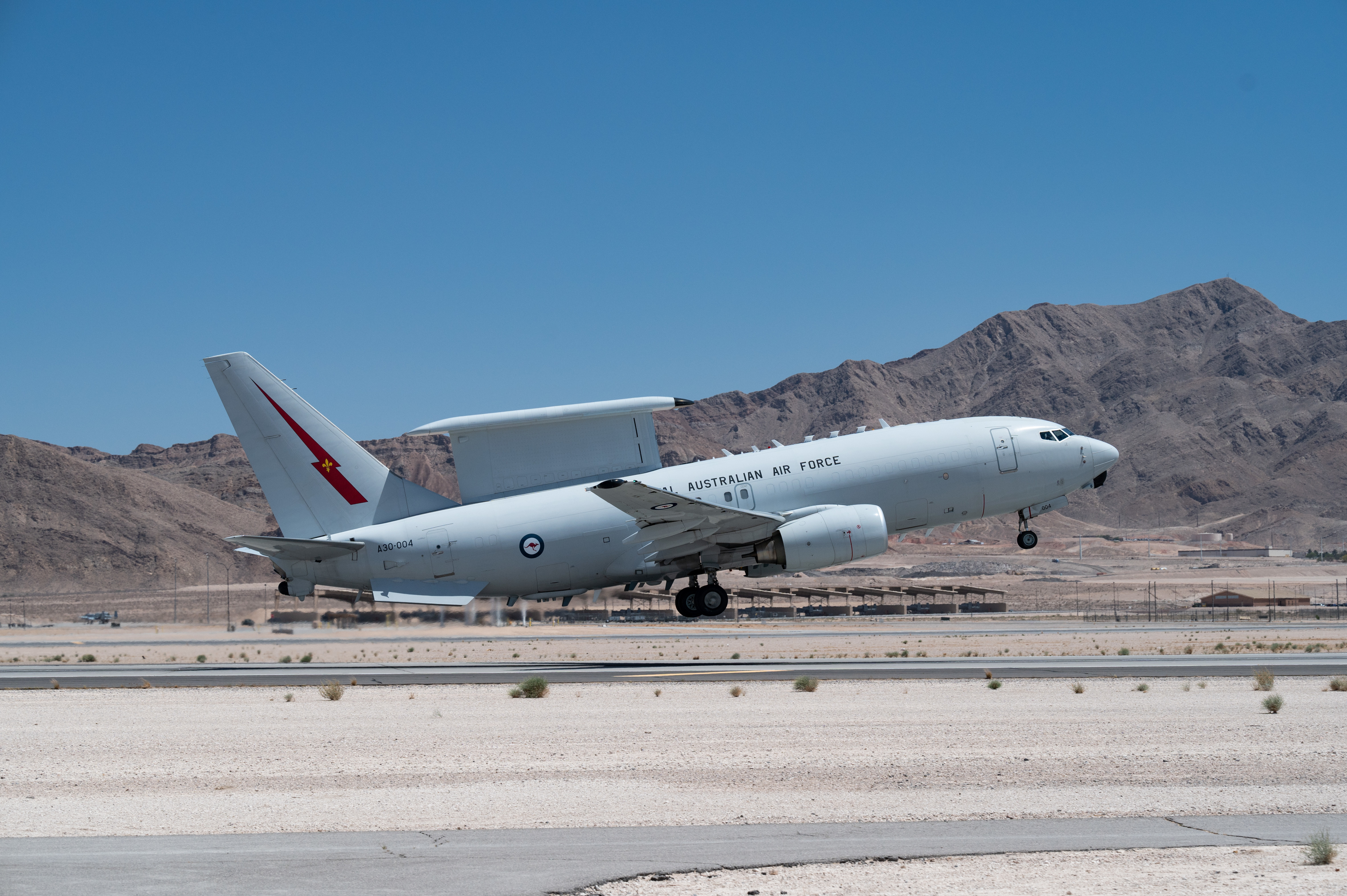
The White House budget office wants to raid a Navy radar-plane account and a classified Air Force line to pull the E-7 Wedgetail back from the dead.
The US House approving funding for the E-7 Wedgetail despite White House budget office objections signifies ongoing legislative and executive branch tension regarding defence spending priorities and strategic recapitalisation.
This move indicates a legislative commitment to specific airborne early warning and control (AEW&C) capabilities, potentially accelerating the modernisation of the US Air Force's intelligence, surveillance, and reconnaissance (ISR) fleet and signaling a sustained focus on advanced defence technologies.
The Air Force's plan to replace its E-3 Sentry AWACS fleet with the E-7 Wedgetail gains significant momentum, while the Navy's E-2 Hawkeye program avoids immediate funding cuts, reflecting a reprioritisation within the broader defence budget toward contested air superiority and networked battlefields.
- · Boeing
- · US Air Force
- · Defence Tech Sector
- · White House budget office
- · US Navy (potential future funding raids)
The E-7 Wedgetail program receives critical funding, advancing its development and deployment timeline.
This decision influences future defence acquisition strategies, potentially favoring proven, modern platforms despite initial budget constraints.
Allied nations operating or considering the E-7 Wedgetail may see increased confidence and interoperability opportunities, further integrating global AEW&C capabilities.
This signal links to a primary source. Continuum Brief monitors and indexes it as part of the live intelligence stream — we do not republish source content.
Read at Navy Times