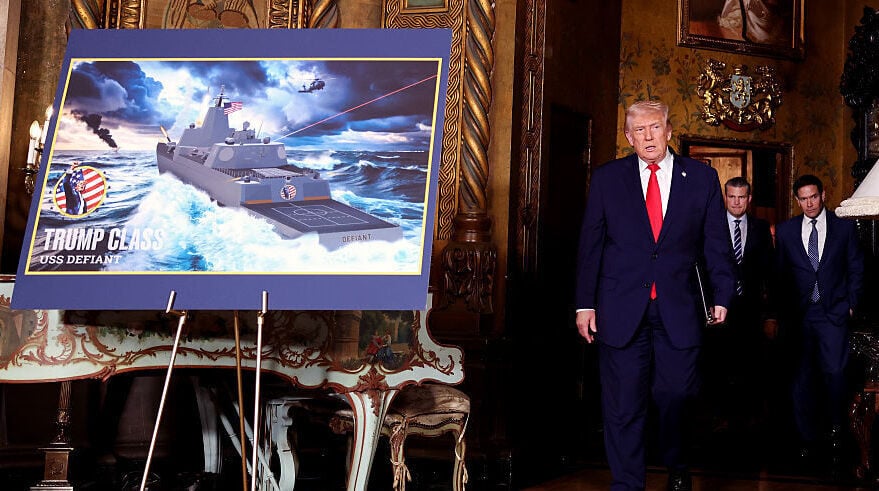
Multiple lawmakers have questioned the value of the battleship in recent weeks, often citing the expected cost of the vessel.
Amidst discussions for the Defense Budget 2027, Congress is scrutinizing the value and design of expensive naval assets like battleships, particularly given evolving naval warfare paradigms.
This debate highlights a potential shift in defense spending priorities and naval strategy, moving away from large capital ships towards more cost-effective and adaptable solutions, which could impact the future industrial base.
Congressional pressure is forcing the Navy to re-evaluate traditional battleship designs, potentially leading to a re-allocation of funds and a focus on different naval capabilities.
- · Defense contractors specializing in drones and autonomous systems
- · Naval strategists advocating for distributed maritime operations
- · Taxpayers (potentially, due to reduced spending on large platforms)
- · Traditional shipbuilding industry focused on large surface combatants
- · Advocates for conventional blue-water naval power projection
- · Legacy naval design bureaus
Increased Congressional oversight over major defense acquisition programs will become more common.
The Navy may accelerate investments in unmanned surface vessels and submarine capabilities as alternatives to traditional battleships.
Allied navies might also re-evaluate their large ship programs, following the lead of US budgetary and strategic discussions.
This signal links to a primary source. Continuum Brief monitors and indexes it as part of the live intelligence stream — we do not republish source content.
Read at Breaking Defense