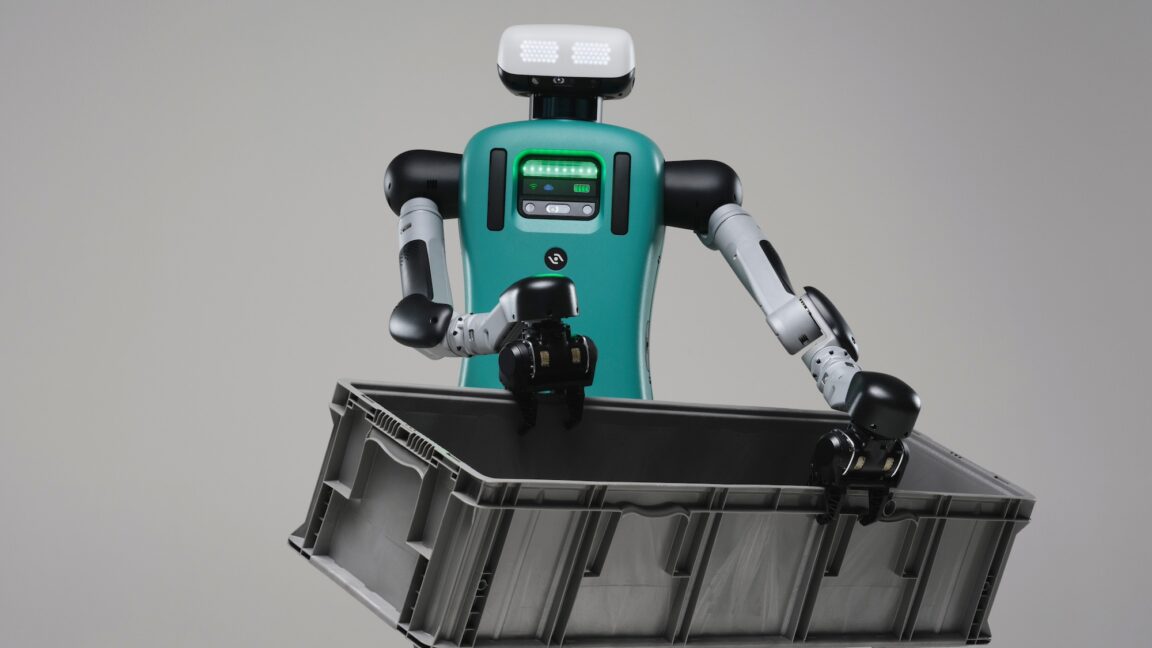
Top robotics researchers and founders explain how robot autonomy is evolving.
Advances in AI, particularly in perception and decision-making, are enabling robots to move beyond pre-programmed tasks towards greater autonomy, integrating more seamlessly into unstructured environments.
This development signals a significant step towards scalable robotic deployment in labour-intensive sectors and potentially homes, reshaping workforce dynamics and economic structures.
The shift from human-supervised industrial automation to autonomous, adaptable robots expands their potential applications significantly, blurring lines between specialized and general-purpose robotics.
- · Robotics companies
- · AI software developers
- · Logistics and manufacturing sectors
- · Elderly care services
- · Low-skilled manual labour
- · Companies unable to integrate automation
- · Traditional manufacturing employment
Increased productivity and efficiency across various industries due to autonomous robot deployment.
Significant shifts in labour markets, requiring widespread reskilling and potentially impacting social safety nets.
The emergence of new service economies centered around robot maintenance, programming, and ethical oversight.
This signal links to a primary source. Continuum Brief monitors and indexes it as part of the live intelligence stream — we do not republish source content.
Read at Ars Technica — AI