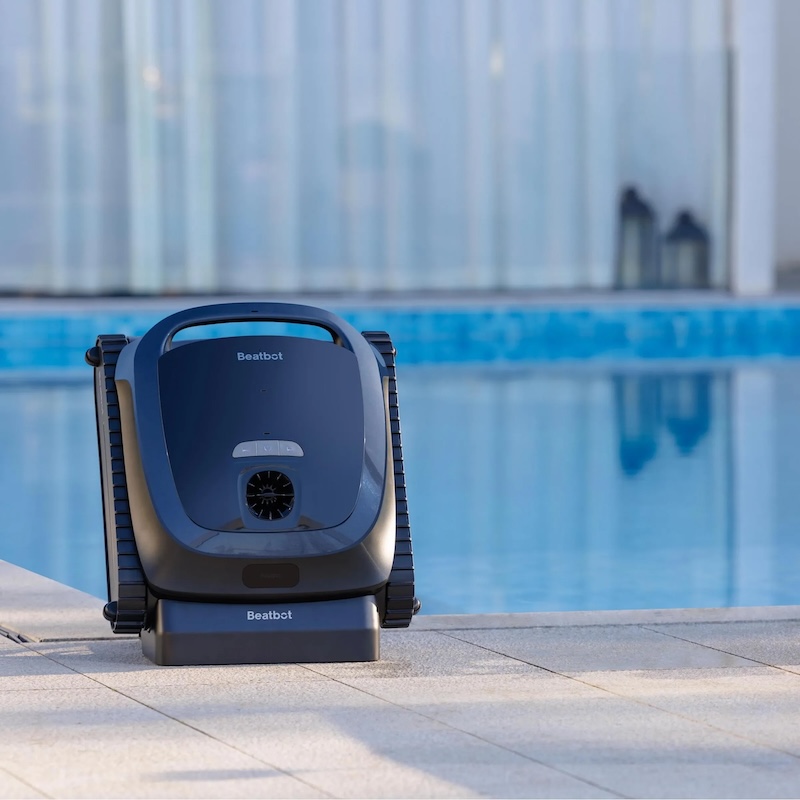
Robotic pool cleaners used to be judged mostly by suction, brushes, and how much debris they could collect. Those things still matter, but they are no longer the whole performance story. The bigger shift is navigation. A pool robot that moves randomly may clean some areas well and miss others. It may repeat the same […]
Advances in AI, particularly in navigation and object recognition, are enabling more sophisticated autonomous systems to emerge in consumer and industrial applications.
Improved AI navigation makes autonomous robotic systems more efficient and effective, expanding their utility beyond basic tasks to more complex environments and applications.
Autonomous robots are moving beyond simple programmed movements to intelligent, adaptive navigation, enhancing their performance and reducing human oversight requirements.
- · Robotics manufacturers
- · Smart home technology sector
- · Consumers seeking automated solutions
- · Manufacturers of unintelligent robotic systems
More efficient and reliable autonomous cleaning robots become standard in consumer and commercial settings.
Demand for advanced AI navigation components increases, driving innovation and cost reduction in this specialized field.
The success of AI navigation in simpler robots paves the way for greater public acceptance and deployment of more complex autonomous systems in other domains.
This signal links to a primary source. Continuum Brief monitors and indexes it as part of the live intelligence stream — we do not republish source content.
Read at Robotics & Automation News