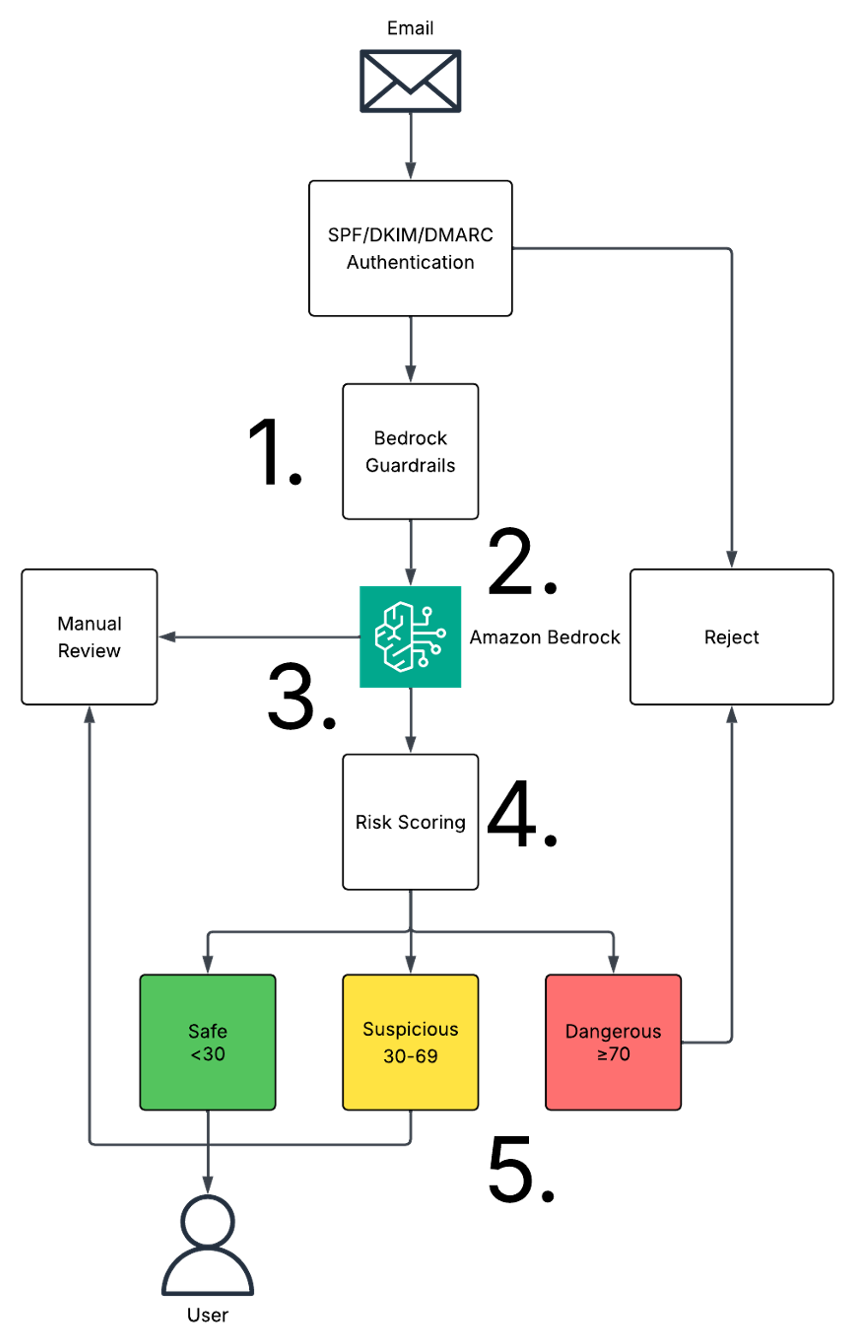
Social engineering through phishing remains one of the most common tactics for launching cyberattacks. AI-generated phishing email messages now pose a new challenge for security teams managing email systems, significantly raising the risk because of their advanced sophistication. Modern social engineers use generative AI and open source intelligence (OSINT) to craft thousands of unique messages […]
The rapid proliferation and increasing sophistication of generative AI models mean that AI-generated phishing is becoming a significant and immediate cybersecurity threat.
This highlights the dual-use nature of foundational AI, simultaneously creating advanced defense capabilities and significantly enhancing attack vectors, demanding continuous evolution in cybersecurity strategies.
Cybersecurity defenses must now contend with highly personalized, scalable, and sophisticated phishing attacks, rendering traditional detection methods less effective and increasing the demand for AI-powered countermeasures.
- · AWS
- · Cybersecurity providers
- · AI defense solution developers
- · Cloud security platforms
- · Organizations with legacy email security
- · Individuals susceptible to social engineering
- · Traditional phishing detection methods
Companies will invest more in AI-powered cybersecurity tools to combat new threats.
An 'AI arms race' will develop between cyber attackers using generative AI and defenders deploying counter-AI systems.
The regulatory landscape for AI misuse and cybersecurity standards will become significantly more stringent globally.
This signal links to a primary source. Continuum Brief monitors and indexes it as part of the live intelligence stream — we do not republish source content.
Read at AWS Machine Learning Blog