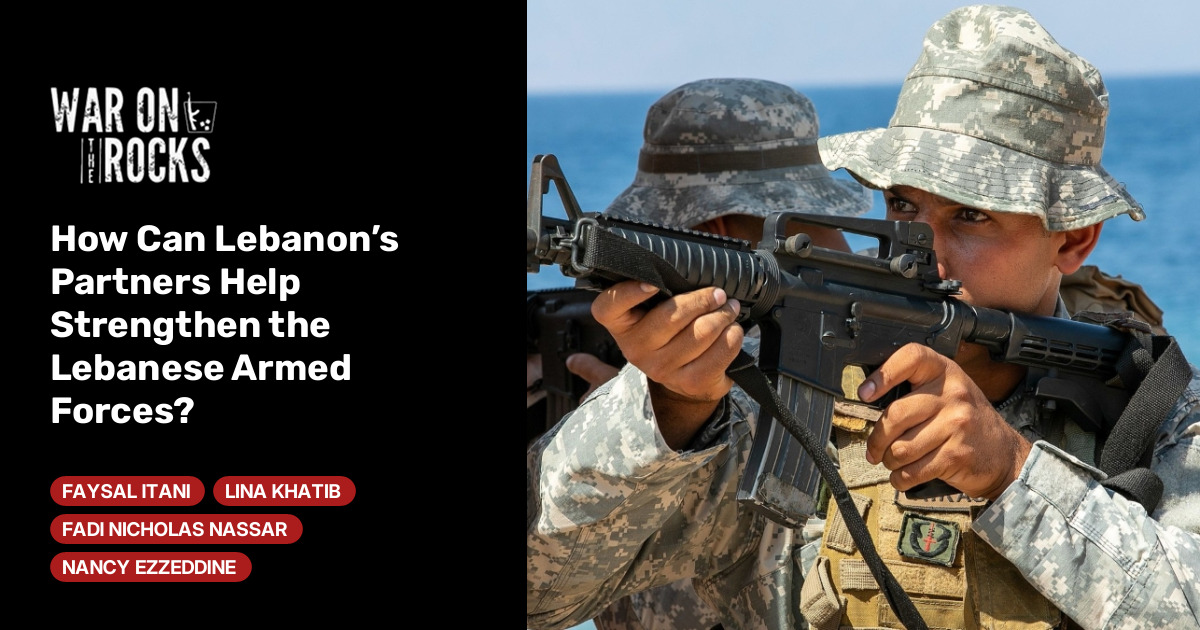
The Lebanese state’s lack of effective sovereignty is a crucial problem in efforts to negotiate with Israel and disarm Hizballah. In response to intensified fighting between Israel and Hizballah, the United States began hosting talks between Israel and the Lebanese government in April. However, fighting has continued, and Hizballah recently rejected a proposed ceasefire deal.In 2025, in a historic move, the Lebanese government made plans for the Lebanese Armed Forces to disarm Hizballah. However, the military made slow progress, partly due to fears that more aggressive moves might splinter the
The intensification of conflict between Israel and Hizballah, coupled with a rejected ceasefire, highlights the urgency of strengthening the Lebanese Armed Forces to enforce state sovereignty.
This item is critical for understanding regional stability in the Middle East and the challenge of state authority versus non-state actors, which impacts geopolitical power dynamics and potential military interventions.
Lebanon's partners are actively involved in discussions to bolster the Lebanese Armed Forces, signaling a potential shift in strategies to address Hizballah's influence and the broader sovereignty issue.
- · Lebanese Armed Forces
- · United States diplomacy
- · Regional stability advocates
- · Hizballah
- · Lebanese state sovereignty
- · Iranian influence
Increased international aid and training for the Lebanese Armed Forces to enhance their operational capabilities.
A more capable Lebanese military potentially leads to internal pressure on Hizballah, reducing its political and military leverage.
Reduced Hizballah influence could alter regional power balances and decrease the likelihood of wider conflicts between Israel and non-state actors.
This signal links to a primary source. Continuum Brief monitors and indexes it as part of the live intelligence stream — we do not republish source content.
Read at War on the Rocks