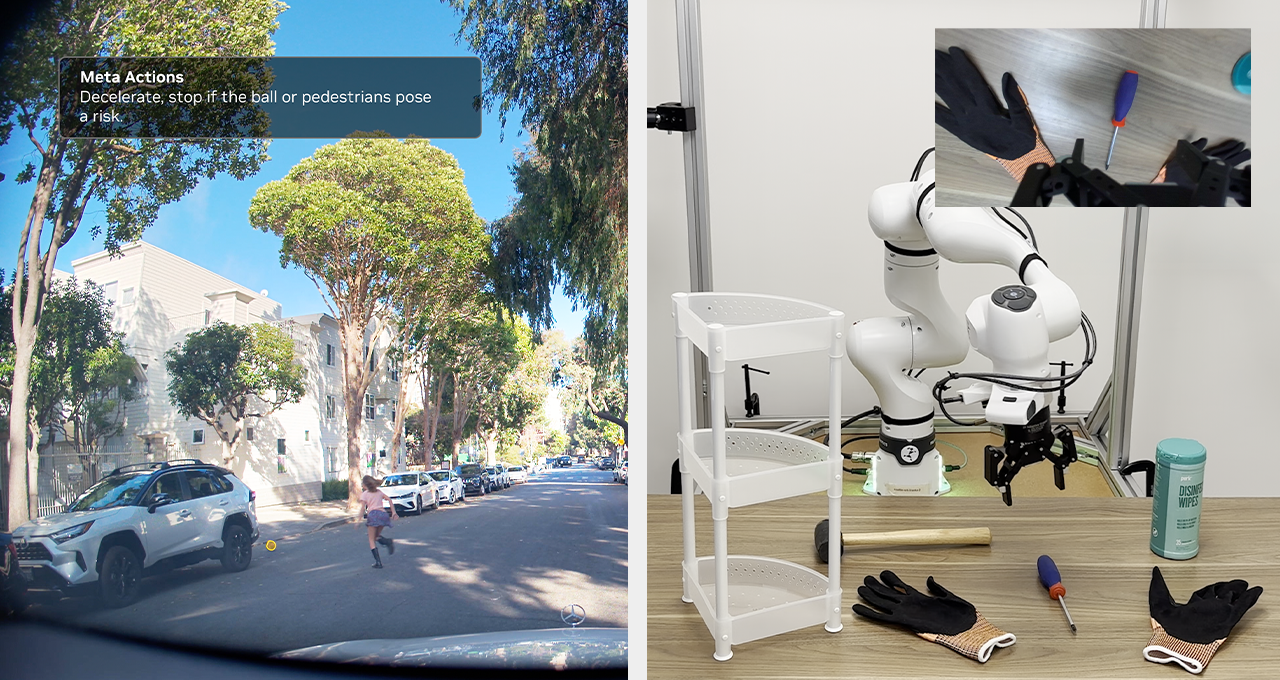
The continuous advancements in AI and robotics, coupled with the increasing demand for autonomous systems, are driving the development of sophisticated cognitive architectures like Cosmos 3.
This development marks a significant step towards more capable and reliable autonomous physical AI systems, moving beyond reactive behaviors to proactive, thought-out actions.
Physical robots will become more intelligent and less prone to errors or inefficient actions by planning and simulating outcomes before execution, enhancing their utility and safety in real-world environments.
- · NVIDIA
- · Robotics industry
- · AI software developers
- · Automation sector
- · Companies reliant on simple, reactive robotic systems
- · Manual labor in dangerous or repetitive tasks
More efficient and adaptable robotic deployments across various industries, from manufacturing to logistics and potentially consumer applications.
Accelerated innovation in humanoid robotics and complex autonomous systems as 'thinking' capabilities become standard.
Potential for new ethical and regulatory frameworks focusing on the decision-making processes of advanced AI in physical forms.
This signal links to a primary source. Continuum Brief monitors and indexes it as part of the live intelligence stream — we do not republish source content.
Read at NVIDIA Blog