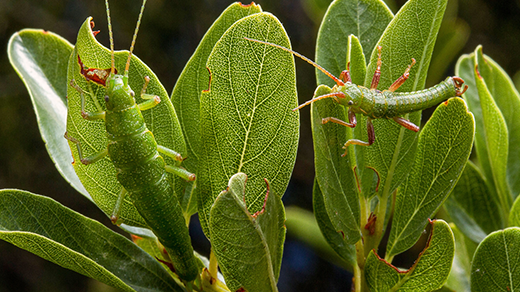
Evolutionary biologists are uncovering genomic mechanisms that allow populations to adapt quickly to different, hyperlocal habitats without splitting into new species. The post How Ecotypes Harbor the Genetic Memory of a Species’ Past first appeared on Quanta Magazine
Advances in genomic sequencing and computational biology are enabling deeper insights into the mechanisms of adaptation and evolution, making these discoveries possible now.
Understanding how species adapt genetically to hyperlocal environments without speciation could inform synthetic biology efforts, conservation strategies, and agricultural innovation.
This research reveals new facets of genetic plasticity and rapid adaptation, refining our understanding of evolutionary processes beyond traditional speciation events.
- · Synthetic biologists
- · Conservation scientists
- · Agricultural researchers
- · Genomic sequencing companies
- · Traditional evolutionary models
Increased understanding of evolutionary mechanisms and genetic resilience within species.
Potential for engineering adaptive traits into organisms for climate resilience or resource optimization.
New ethical considerations arising from the ability to precisely manipulate genetic 'memory' for environmental adaptation.
This signal links to a primary source. Continuum Brief monitors and indexes it as part of the live intelligence stream — we do not republish source content.
Read at Quanta Magazine