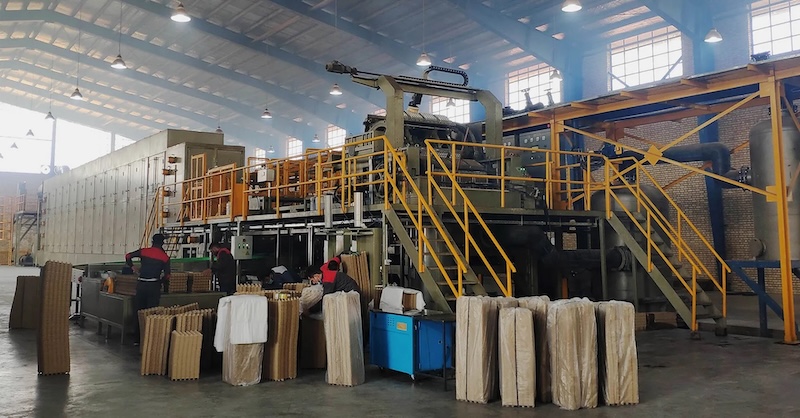
As global manufacturers accelerate the transition toward sustainable production, HGHY’s pulp molding equipment and automation systems are becoming critical components of modern eco-friendly manufacturing operations. Stricter environmental regulations, rising labor costs, and a steady climb in demand for recyclable products have pushed more manufacturers toward fully automated molded fiber production lines – and HGHY has […]
The convergence of stricter environmental regulations, rising operational costs, and increasing consumer demand for sustainable products is accelerating the adoption of eco-friendly manufacturing technologies.
This development highlights the ongoing industrial shift towards automated, sustainable production methods, indicating a critical evolution in how goods are manufactured and consumed globally.
Manufacturing processes are becoming more automated and environmentally conscious, moving away from traditional, less sustainable production lines towards circular economy models.
- · HGHY
- · Pulp molding equipment manufacturers
- · Sustainable packaging industry
- · Consumers of eco-friendly products
- · Traditional packaging manufacturers
- · Industries heavily reliant on non-recyclable materials
- · High-labor-cost manufacturing regions lacking automation
Increased market penetration of molded fiber products as a sustainable alternative.
Pressure on other industrial sectors to adopt similar automated and eco-friendly manufacturing practices.
Potential for new material science innovations to further enhance sustainable production capabilities.
This signal links to a primary source. Continuum Brief monitors and indexes it as part of the live intelligence stream — we do not republish source content.
Read at Robotics & Automation News