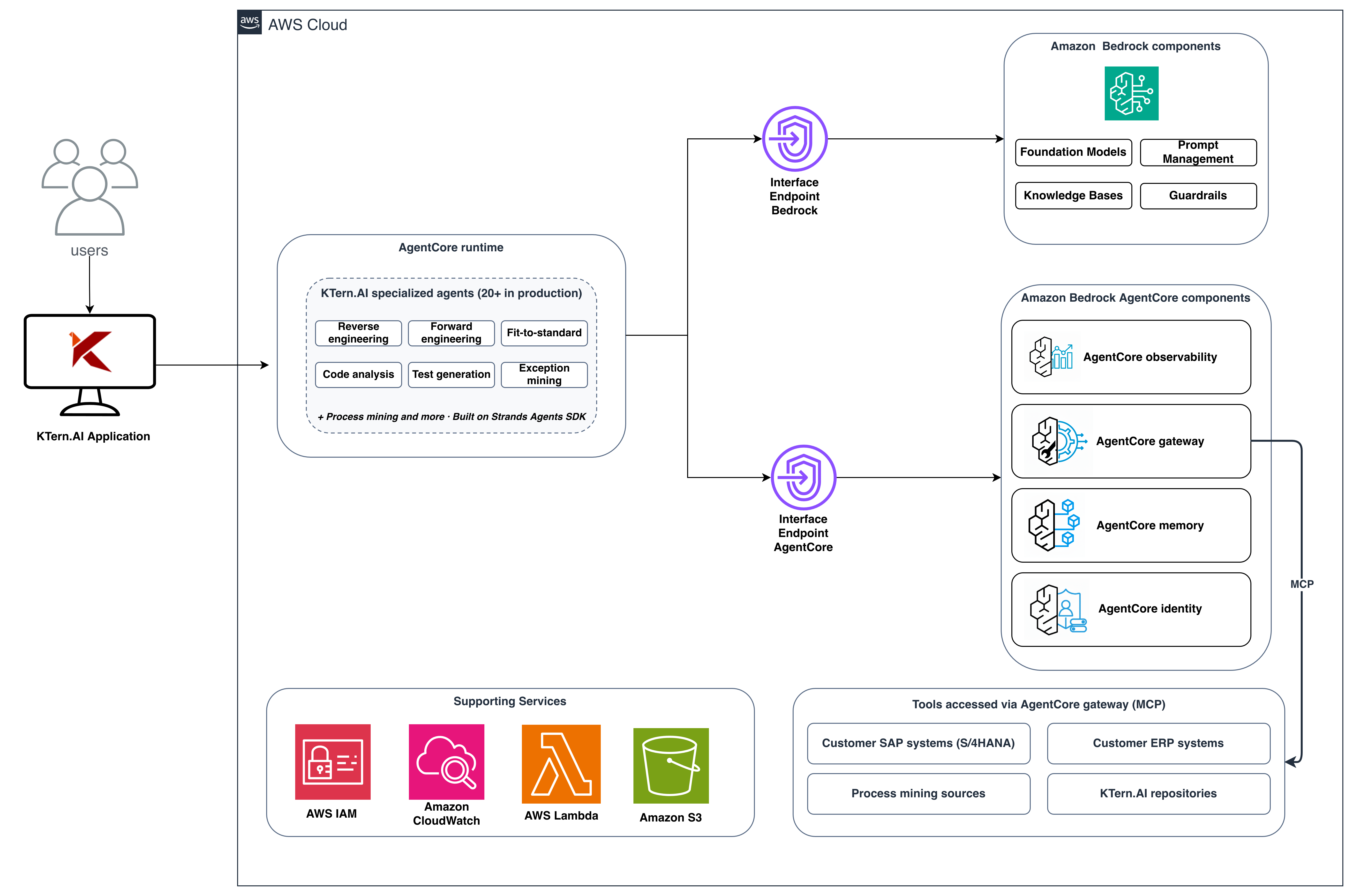
Evolving from a traditional software as a service (SaaS) platform into a next-generation agentic AI platform meant orchestrating multiple specialized agents across long-running enterprise programs. Each agent operates with persistent context, secure tool access, and production-grade reliability. We built that system on Amazon Bedrock AgentCore using the Strands Agents SDK. This post walks through how we architected it, which agents we built, and the outcomes for our customers.
The rapid advancement in large language models and foundational models has created the technical bedrock for sophisticated AI agents, making this shift from traditional SaaS to agentic platforms both feasible and increasingly necessary for enterprise efficiency.
This development highlights the early but significant move towards autonomous AI systems capable of orchestrating complex enterprise workflows, potentially collapsing entire SaaS layers and dramatically altering how businesses operate.
Enterprise software is evolving from static, human-operated tools to dynamic, AI-driven agents that can independently execute persistent tasks with secure tool access and context, marking a fundamental shift in business process automation.
- · AWS
- · KTern.AI
- · Enterprises adopting agentic AI
- · Strands Agents
- · Traditional enterprise SaaS providers
- · Consulting firms performing repetitive integration tasks
Companies will begin to re-architect their enterprise IT stacks around agentic AI frameworks to leverage increased automation and efficiency.
The demand for human white-collar labor involved in routine data orchestration and application integration will decrease, leading to workforce reallocation and upskilling initiatives.
A new category of 'agent-native' businesses may emerge, designed from the ground up to operate with minimal human intervention, fundamentally altering competitive landscapes and market entry barriers.
This signal links to a primary source. Continuum Brief monitors and indexes it as part of the live intelligence stream — we do not republish source content.
Read at AWS Machine Learning Blog