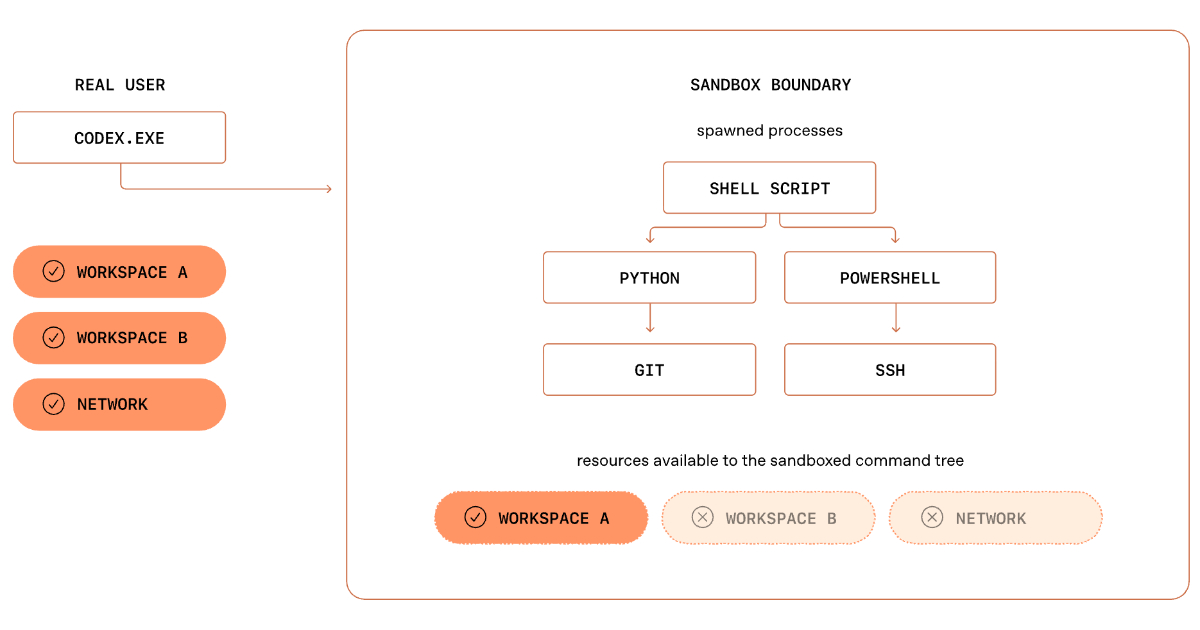
OpenAI details Codex Windows sandbox architecture, showing how SIDs, ACLs, restricted tokens, and dedicated sandbox accounts enable safe execution of autonomous coding tasks. The design balances isolation with real developer workflows and shows how OS security primitives must be composed for AI agents on local development environments. By Leela Kumili
The rapid development and deployment of increasingly autonomous AI agents necessitate robust security solutions to handle their interactions with local environments, particularly in sensitive tasks like code generation and execution.
This development is crucial for expanding the capabilities and trustworthiness of AI agents in development workflows, directly addressing critical security concerns that could otherwise limit their adoption.
Local development environments can now integrate autonomous AI coding agents with a higher degree of security and isolation, fostering more sophisticated AI-assisted development paradigms.
- · OpenAI
- · Developers leveraging AI-assisted coding
- · Cybersecurity solution providers
- · Cloud computing platforms
- · Traditional manual software development processes
- · Organizations with weak cybersecurity postures
- · Attackers targeting AI development environments
Increased adoption of AI agents in sensitive coding and operational tasks due to enhanced security assurances.
New industry standards and best practices emerge for securing AI agent interactions with operating systems.
The development of 'AI operating systems' or hypervisors specifically designed for managing and securing autonomous agent ecosystems at scale.
This signal links to a primary source. Continuum Brief monitors and indexes it as part of the live intelligence stream — we do not republish source content.
Read at InfoQ