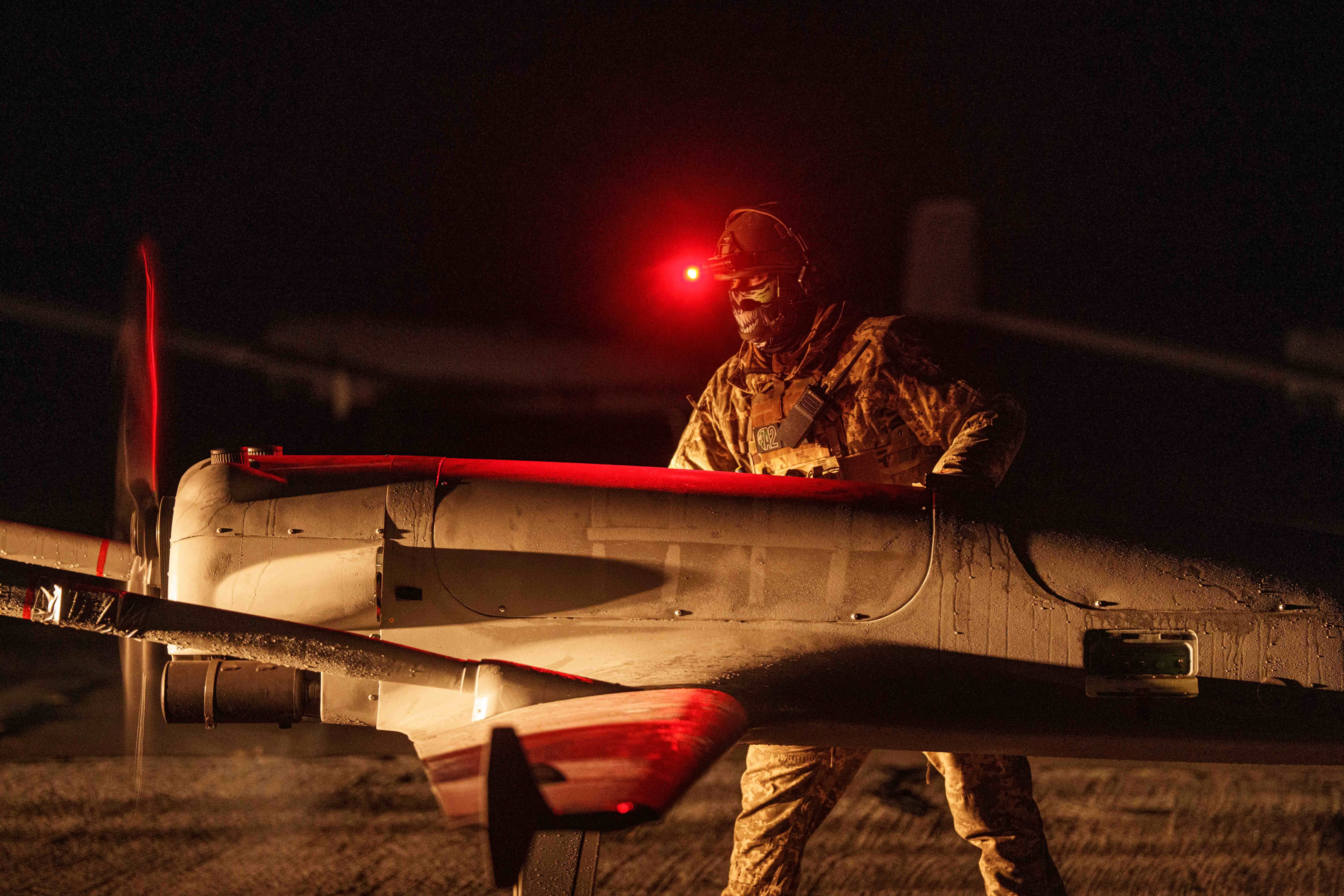
A Russian drone wounded two civilians in Romania on Friday, days after Lithuania detailed how Moscow is also steering Ukraine's drones onto allied soil.
The proliferation of drone technology and its evolving warfare applications are exposing vulnerabilities in current defense strategies and raising new geopolitical challenges.
This incident highlights the escalating and increasingly complex threat posed by drones, particularly the deliberate weaponization of intercepted or repurposed technology for asymmetric attacks on NATO territory.
NATO's defensive posture and intelligence protocols regarding drone threats, especially those originating from ongoing conflicts, must adapt to account for repurposed enemy technology impacting allied soil.
- · Defense contractors specializing in counter-drone systems
- · Electronic warfare developers
- · NATO intelligence agencies
- · Civilian populations near conflict zones
- · NATO's current air defense doctrines
- · Traditional border security measures
Increased investment in multi-layered counter-drone technologies and electronic warfare capabilities across NATO member states.
Revision of NATO's Article 5 trigger conditions or interpretation regarding indirect attacks and the weaponization of enemy assets.
The development of international protocols and countermeasures against drone-enabled asymmetric warfare, potentially leading to new arms control discussions.
This signal links to a primary source. Continuum Brief monitors and indexes it as part of the live intelligence stream — we do not republish source content.
Read at Defense News