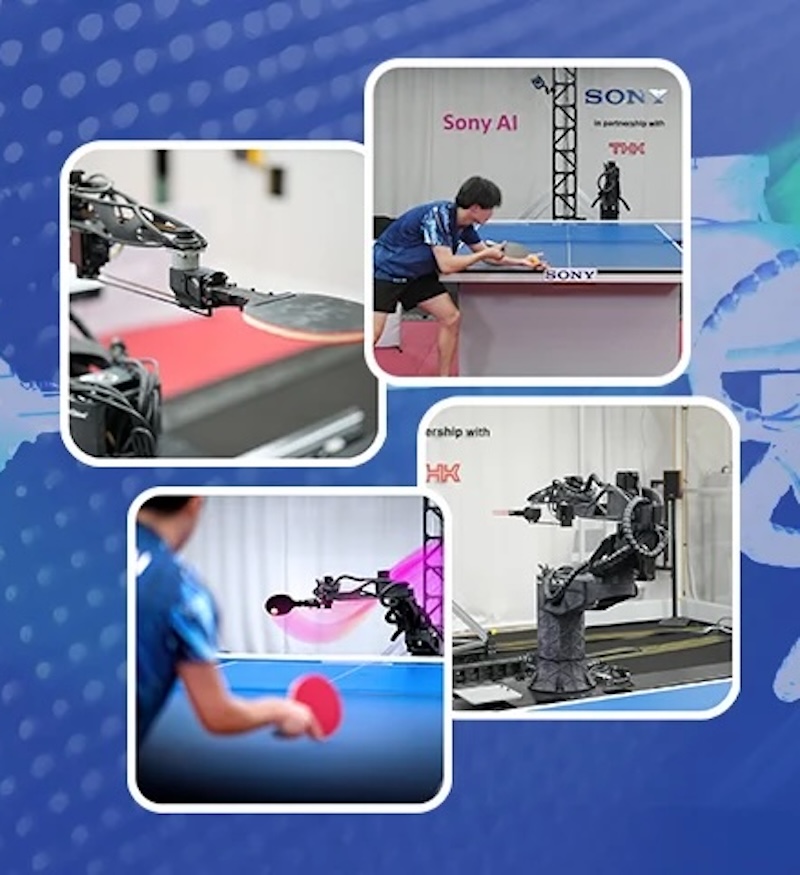
Although Omron and Kuka have demonstrated similar systems before, a table tennis-playing robot may still sound like a novelty to some. After all, industrial robots already assemble cars, sort parcels and weld metal with remarkable precision. But for researchers working at the intersection of robotics and artificial intelligence, table tennis represents one of the most […]
Advances in robotics and AI, particularly in areas like reinforcement learning and real-time sensor processing, are making complex physical interactions achievable now.
This demonstrates significant progress in physical AI, moving beyond controlled industrial environments to nuanced, dynamic human-like tasks, which is critical for future robotics applications.
The ability of robots to handle complex, real-time physical interactions with precision is advancing, pushing the boundaries of what autonomous systems can achieve outside of predictable industrial settings.
- · Robotics companies
- · AI research institutions
- · Automation sector
- · Tasks requiring dynamic dexterity
Improved robotic dexterity and real-time decision-making for complex physical tasks.
Accelerated development of general-purpose humanoid and service robots capable of nuanced interactions.
New forms of human-robot collaboration and interaction emerging in various sectors beyond manufacturing.
This signal links to a primary source. Continuum Brief monitors and indexes it as part of the live intelligence stream — we do not republish source content.
Read at Robotics & Automation News