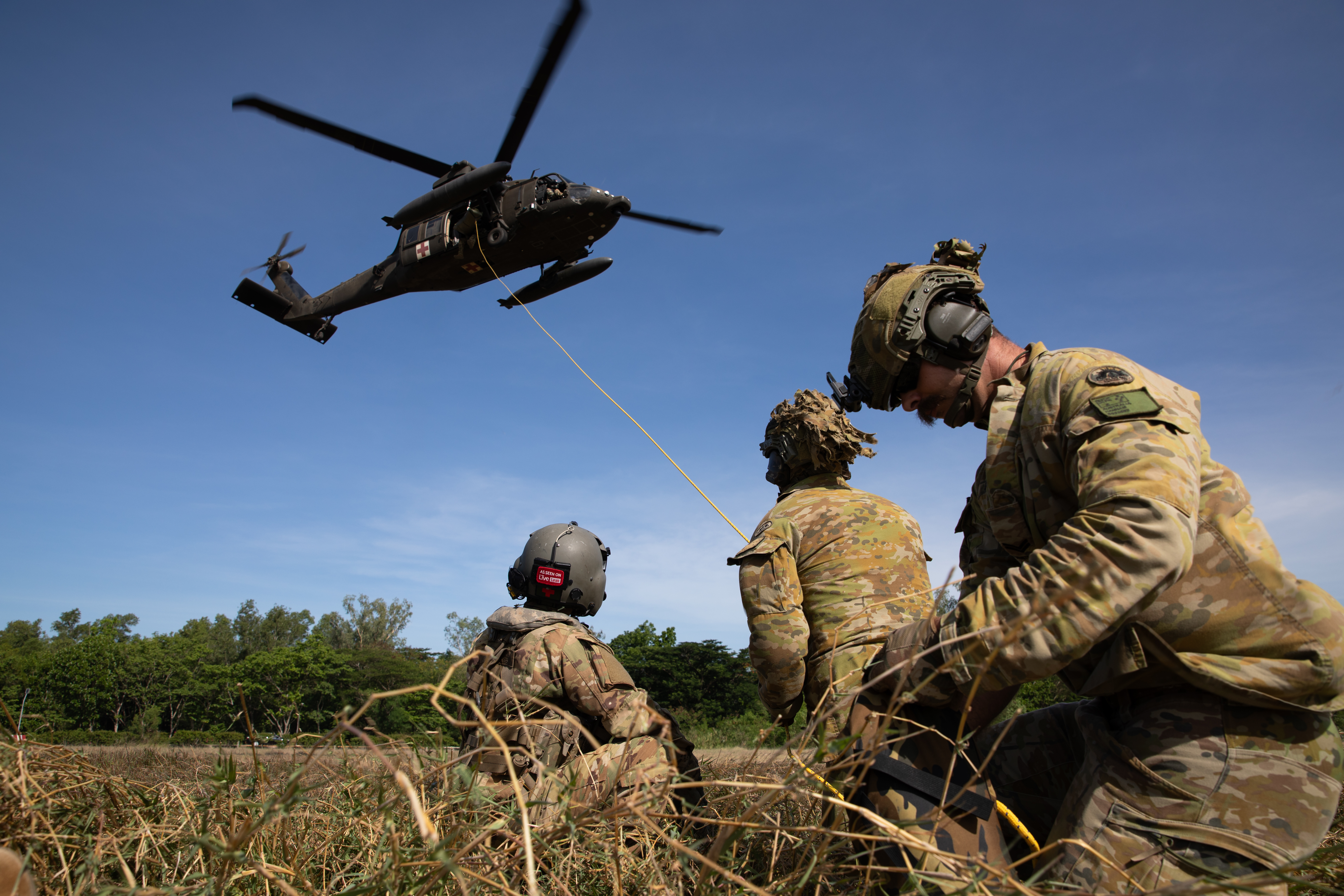
Distance, contested air, communication disruptions, weather and limited evacuation platforms could greatly impact timely access to medical care.
The US military is actively reorienting towards potential conflicts in the Indo-Pacific, necessitating the adaptation of all operational aspects, including medical readiness, to the unique challenges of the region.
This highlights the US military's strategic pivot to large-scale, contested operations in the Indo-Pacific, emphasizing the critical role of robust, distributed defence capabilities beyond traditional combat roles.
Combat medics are now training with enhanced focus on distributed operations, prolonged care in austere environments, and reliance on advanced communications in a contested domain, moving beyond conventional evacuation models.
- · US Army Medical Command
- · Defence Tech Innovators (medical)
- · Indo-Pacific Allies
- · Adversaries relying on conventional force projection
Increased investment in medical logistics and resilient communications for dispersed forces.
Development of new medical technologies and protocols suitable for remote, contested environments.
Enhanced interoperability and medical support capabilities among US and allied forces in the Indo-Pacific.
This signal links to a primary source. Continuum Brief monitors and indexes it as part of the live intelligence stream — we do not republish source content.
Read at Defense News