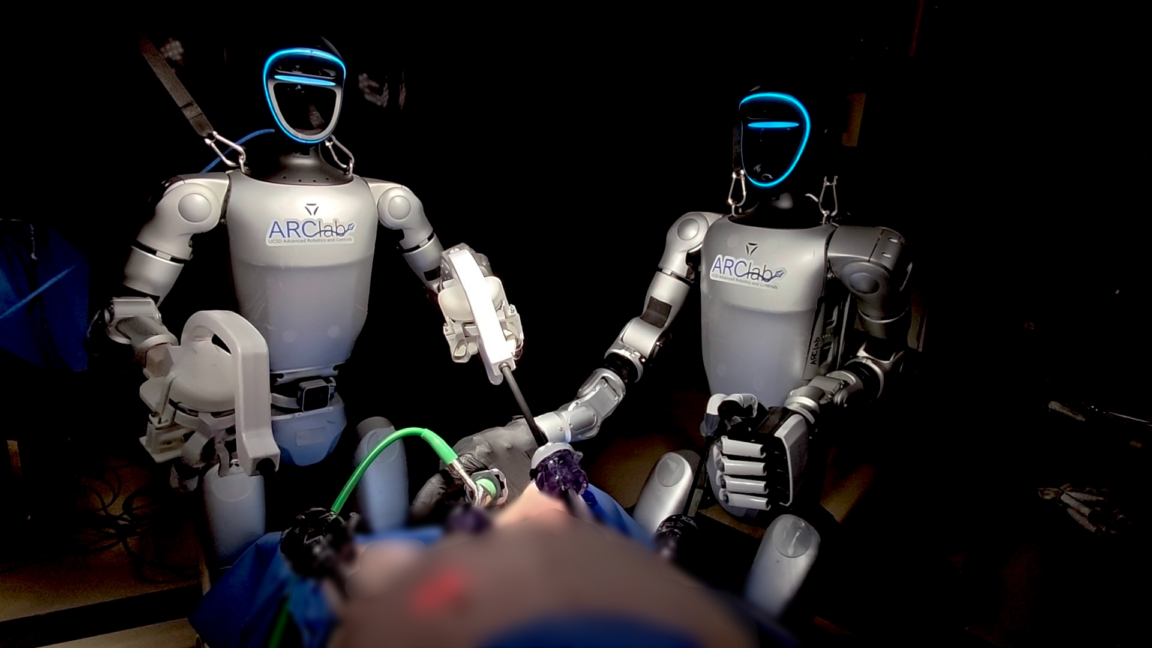
Preclinical trial is testing the feasibility of humanoid robots in surgery.
Advances in AI, particularly in real-time control and vision systems, combined with increasingly dexterous robotic hardware, are enabling precise teleoperation of complex machines like humanoids in sensitive environments.
This marks a critical step towards integrating humanoid robotics into high-stakes environments like surgery, demonstrating their potential for precision and remote capabilities beyond current robotic surgery systems.
The feasibility of deploying general-purpose humanoid robots in highly specialized and delicate tasks is validated, opening new pathways for automation and augmentation in medical fields and beyond.
- · Humanoid robotics manufacturers
- · Medical technology sector
- · Patients requiring advanced surgery
- · Teleoperation software developers
- · Traditional medical device manufacturers (if slow to adapt)
- · Certain surgical support roles (long term)
- · Manual surgical tool providers
Successful preclinical trials accelerate investment and regulatory pathways for humanoid robots in medical applications.
The proven precision of humanoid teleoperation expands their application to other hazardous or remote manipulation tasks, potentially in manufacturing or disaster response.
As humanoid capabilities advance, the ethical and legal frameworks governing autonomous medical devices and remote operations become significantly more complex and urgent to define.
This signal links to a primary source. Continuum Brief monitors and indexes it as part of the live intelligence stream — we do not republish source content.
Read at Ars Technica — AI