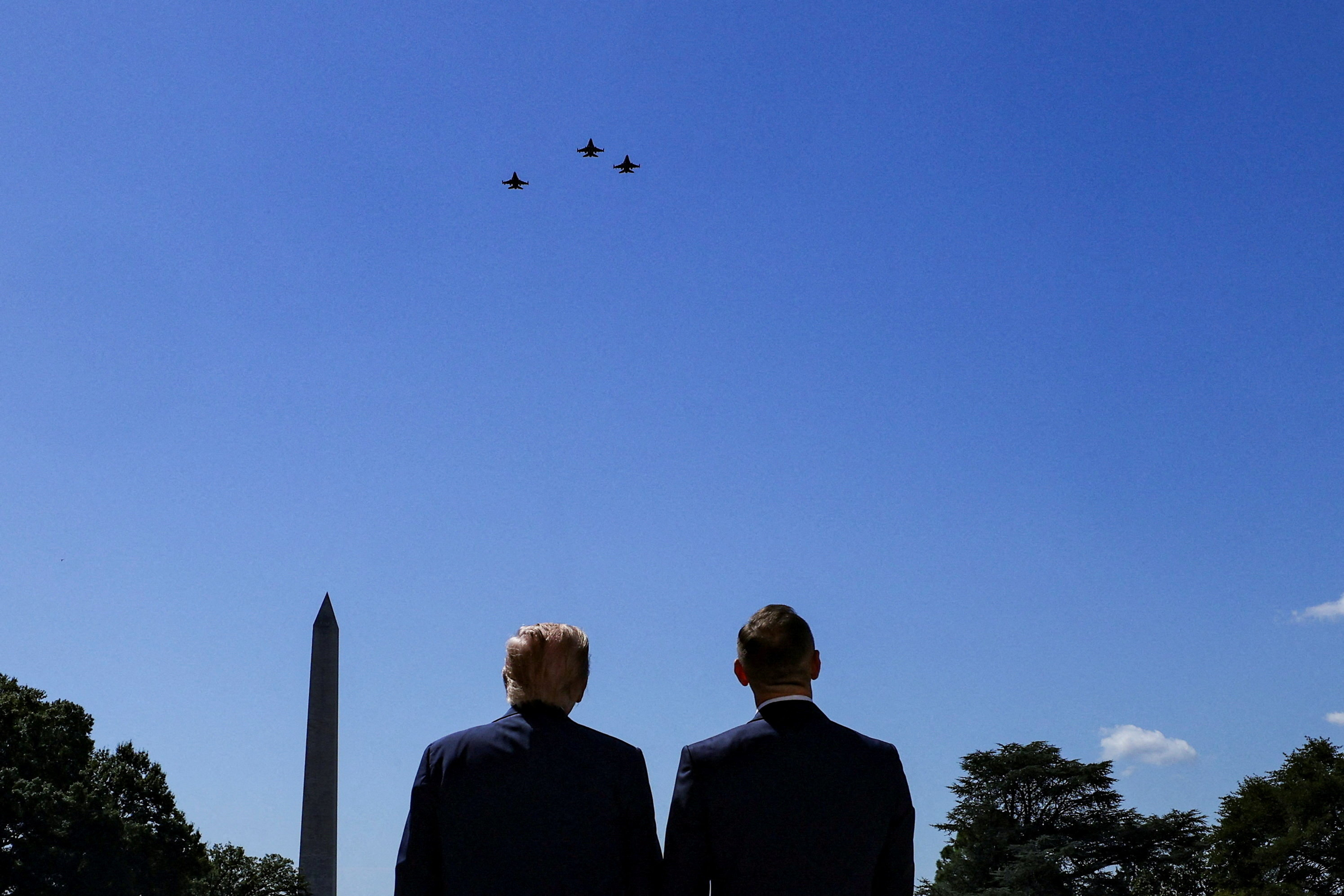
A week after cancelling a U.S. Army deployment to Poland, Trump announces an additional 5,000 troops will be sent to the country.
The deployment follows a cancellation, indicating a swift and potentially unpredictable re-evaluation of US military posture in Europe, likely driven by evolving geopolitical considerations or domestic political pressures.
This move signals a significant and potentially volatile shift in US foreign policy and military strategy, impacting alliances, regional stability, and the US's commitment to European security.
The previous expectation of a withdrawal has been reversed, with an increased troop presence now indicating a more assertive and potentially unpredictable US military engagement in Eastern Europe.
- · Poland (as host nation)
- · US defense contractors
- · NATO's eastern flank
- · Nationalist political factions
- · Russia (as a geopolitical rival)
- · European allies seeking predictable US engagement
- · Detente-focused diplomatic efforts
- · US taxpayers (increased defense spending)
Increased regional tensions and a heightened military readiness posture in Eastern Europe.
Potential for allied nations to re-evaluate their defense spending and strategic alignment given fluctuating US commitment.
Enhanced US military presence could lead to a 'new normal' of sustained higher troop deployments, influencing long-term geopolitical dynamics.
This signal links to a primary source. Continuum Brief monitors and indexes it as part of the live intelligence stream — we do not republish source content.
Read at Air Force Times