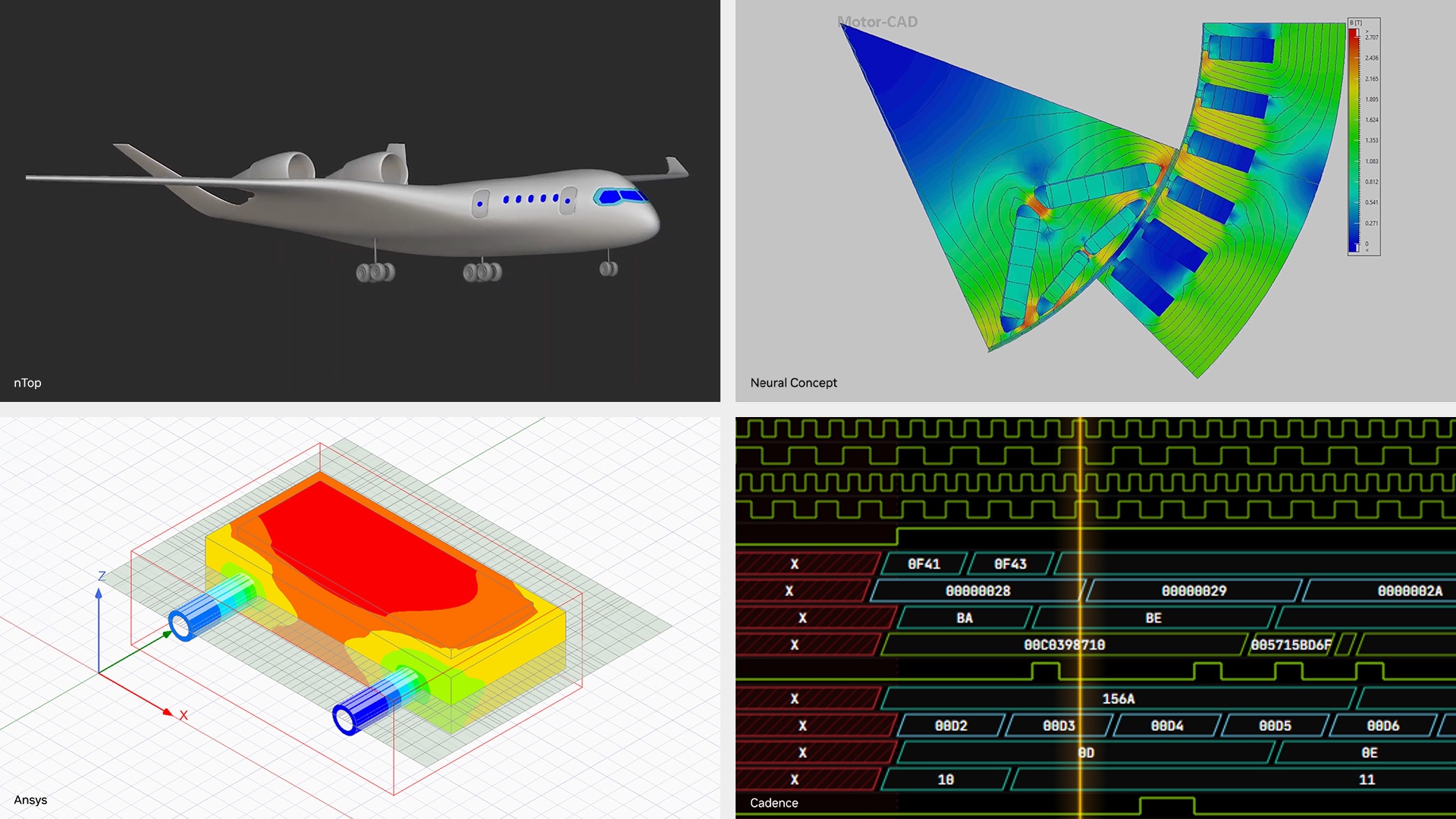
Accelerated computing has revolutionized industrial engineering, compressing simulation times from weeks to hours. Today’s remaining challenges sit in the end-to-end workflow surrounding the simulations: computer-aided design, meshing, simulation setup and debugging, as well as post-processing and generating summary reports of these processes. At GTC Taipei at COMPUTEX, NVIDIA and more than a dozen engineering software […]
NVIDIA is leveraging its accelerated computing lead to address workflow bottlenecks in industrial engineering, pushing deeper into end-to-end AI applications as the foundational AI technology matures.
This development signifies a crucial step in deploying autonomous AI agents to automate complex, high-value industrial design and simulation processes, accelerating product development and reducing costs.
Industrial software workflows will transition from human-intensive processes with computational aids to AI-driven autonomously generated solutions, enabling faster iteration and optimization.
- · NVIDIA
- · Industrial Software Developers
- · Manufacturing Sector
- · AI Agent Developers
- · Traditional CAD/CAE Consultants
- · Manual Simulation Setup Services
- · Companies without AI Adoption Strategies
The deployment of autonomous AI engineers will dramatically reduce product development cycles in industries like automotive, aerospace, and general manufacturing.
This acceleration will increase competitive pressures for technological leadership, forcing rapid AI adoption across industrial sectors to maintain market relevance.
The widespread automation of design and simulation could lead to an unprecedented pace of innovation in physical goods, potentially transforming entire industries and supply chains with novel, optimized products.
This signal links to a primary source. Continuum Brief monitors and indexes it as part of the live intelligence stream — we do not republish source content.
Read at NVIDIA Blog