Inside Atlassian’s Forge Billing Architecture for Distributed Usage Tracking at Scale
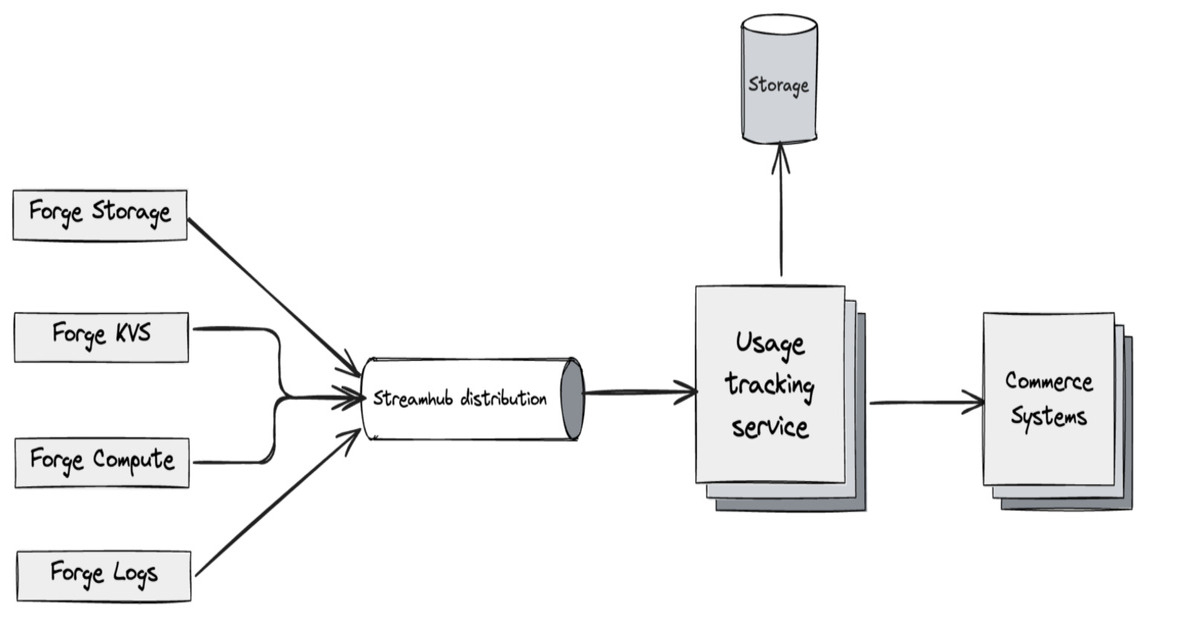
Atlassian details the Forge billing platform built for usage-based pricing across its cloud ecosystem. It processes large-scale usage events with correct attribution, deduplication, and aggregation using a streaming pipeline, idempotent processing, and layered storage to enable accurate billing, near real-time visibility, and reliable reconciliation across distributed services. By Leela Kumili
The increasing prevalence of cloud services and usage-based billing models necessitates robust, scalable, and accurate infrastructure for tracking and monetizing platform usage.
Reliable billing and usage tracking are critical for the economic viability of multi-tenant cloud platforms, impacting revenue assurance and customer trust.
This showcases a specific, proven architecture for handling complex billing in a distributed cloud environment, setting a potential standard for similar platforms.
- · Atlassian
- · Cloud platform providers
- · Event streaming technology vendors
- · Financial operations (FinOps) teams
- · Legacy billing systems
- · Companies with inaccurate usage tracking
- · Manual reconciliation processes
Atlassian improves its ability to accurately monetize its cloud ecosystem and offer flexible pricing models.
Other large-scale cloud providers may adopt similar streaming-based architectures for their billing and usage tracking platforms, driving further innovation in event processing.
Increased accuracy and flexibility in usage-based billing could lead to new business models and pricing strategies for cloud services across the industry, potentially optimizing resource allocation and cost for users.
This signal links to a primary source. Continuum Brief monitors and indexes it as part of the live intelligence stream — we do not republish source content.
Read at InfoQ