Interview with Digid’s Nils Könne and Christian Kreil: Nanoscale sensors could help solve robotics’ tactile sensing challenge
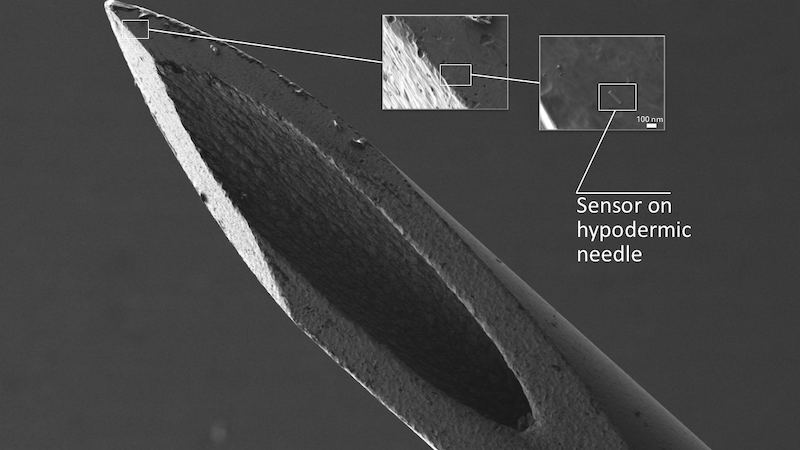
The rapid rise of artificial intelligence and robotics has focused attention on software, large language models, and increasingly powerful processors. But for robots to operate effectively in the physical world, they also need something much more fundamental: the ability to sense and understand their environment. That challenge is creating growing interest in advanced sensing technologies […]
Advances in AI and robotics are highlighting current limitations in physical interaction, making tactile sensing a critical bottleneck for further development and practical application.
Improved tactile sensing is fundamental for robots to operate effectively and safely in complex environments, enabling a wider range of applications and accelerating robotic autonomy.
The focus is broadening beyond software and processing to include advanced hardware like nanoscale sensors, addressing a key physical interaction challenge for robots.
- · Robotics companies
- · Sensor manufacturers
- · AI hardware developers
- · Automation sector
- · Robots limited to highly structured environments
- · Companies unable to integrate advanced sensing
- · Legacy sensor technologies
Enhanced robotic manipulation and interaction capabilities across various industries.
New applications for robots in delicate tasks, human-robot collaboration, and unstructured environments.
Increased overall efficiency and safety in automation, potentially leading to more widespread adoption of autonomous systems in daily life.
This signal links to a primary source. Continuum Brief monitors and indexes it as part of the live intelligence stream — we do not republish source content.
Read at Robotics & Automation News