Interview with Olo Robotics COO Eleanor Tang-Smith: Making robot programming accessible to everyone
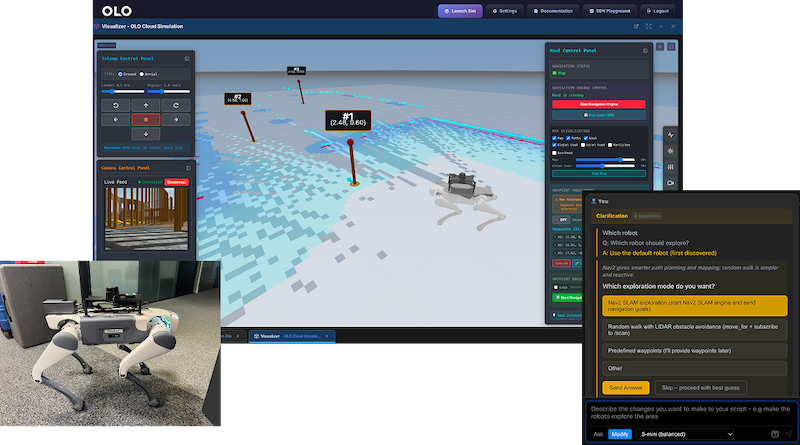
Robotics hardware has advanced rapidly in recent years. Autonomous mobile robots, quadrupeds, robotic arms, and even humanoid robots are becoming increasingly capable and commercially available. Yet for many organizations, one of the biggest barriers to adoption remains software. Building robotic applications typically requires specialist expertise in platforms such as ROS 2 (Robot Operating System 2), […]
Advances in robotics hardware have outpaced software accessibility, creating a critical bottleneck that new platforms like Olo Robotics aim to address.
Making robot programming more accessible will significantly lower barriers to adoption, accelerating the commercialization and widespread deployment of diverse robotic systems.
The focus is shifting from pure hardware capability to software usability and abstraction, broadening the potential user base for robotics and automation.
- · Olo Robotics
- · Automation integrators
- · Small and medium enterprises
- · AI robotics developers
- · Companies reliant on highly specialized robotics programming expertise
- · Legacy robotics software providers
Increased adoption of autonomous mobile robots and other advanced robotic systems across various industries.
A surge in new applications and use cases for robotics as programming becomes democratized, leading to new market opportunities.
Potential for a 'low-code/no-code' movement within robotics, enabling non-specialists to integrate and manage complex automated processes.
This signal links to a primary source. Continuum Brief monitors and indexes it as part of the live intelligence stream — we do not republish source content.
Read at Robotics & Automation News