Interview with Sharpa’s Alicia Veneziani: ‘Dexterous manipulation is the key to useful humanoid robots’
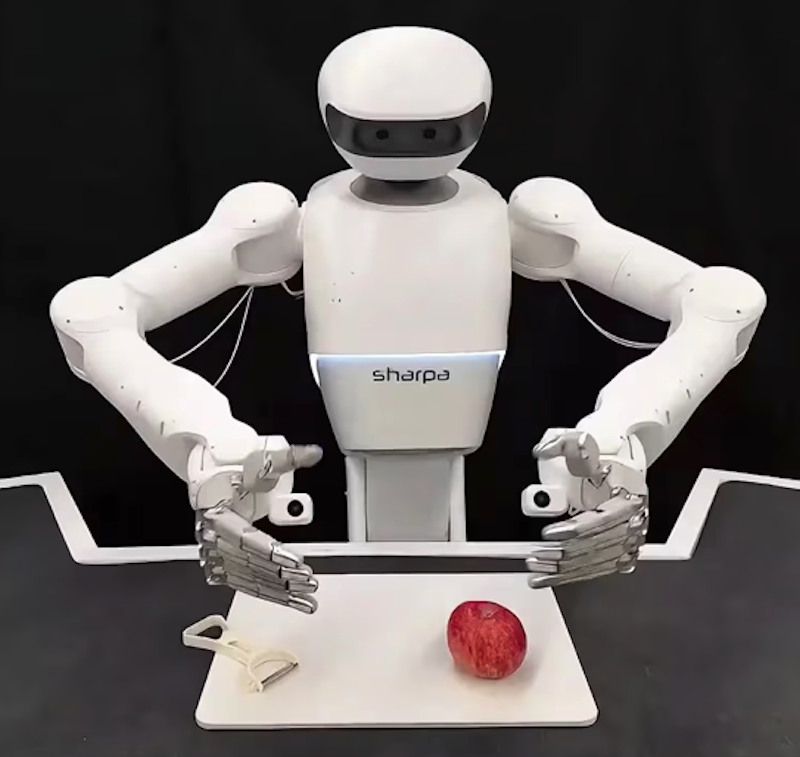
Much of the recent excitement surrounding humanoid robots has focused on increasingly impressive demonstrations of walking, running, jumping, and balancing. Yet many robotics experts argue that locomotion, while important, is only part of the challenge. The bigger obstacle to creating genuinely useful humanoid robots may be something far more familiar to humans: the ability to […]
The increased focus on dexterous manipulation in humanoid robots highlights a critical bottleneck in their path to general utility, moving beyond initial demonstrations of locomotion towards functional interaction with the environment.
This shift in focus from locomotion to fine motor skills is crucial for commercializing humanoid robots, as it enables them to perform complex tasks in unstructured human environments, unlocking significant economic potential.
The primary development hurdle for humanoid robots is shifting from basic movement to advanced object interaction, requiring more sophisticated AI, sensor fusion, and mechanical design for hands and arms.
- · Robotics companies specializing in manipulation
- · AI/ML researchers in reinforcement learning and computer vision
- · Automation integrators
- · Manufacturing and logistics sectors
- · Companies solely focused on robot locomotion
- · Manual labor in repetitive manipulation tasks
Humanoid robots will become increasingly capable of performing complex, human-like tasks requiring fine motor skills.
This capability will lead to wider adoption of humanoids in industries currently reliant on human dexterity, such as manufacturing, healthcare, and retail.
A highly dextrous humanoid workforce could fundamentally alter labor markets, supply chains, and the global distribution of productivity.
This signal links to a primary source. Continuum Brief monitors and indexes it as part of the live intelligence stream — we do not republish source content.
Read at Robotics & Automation News