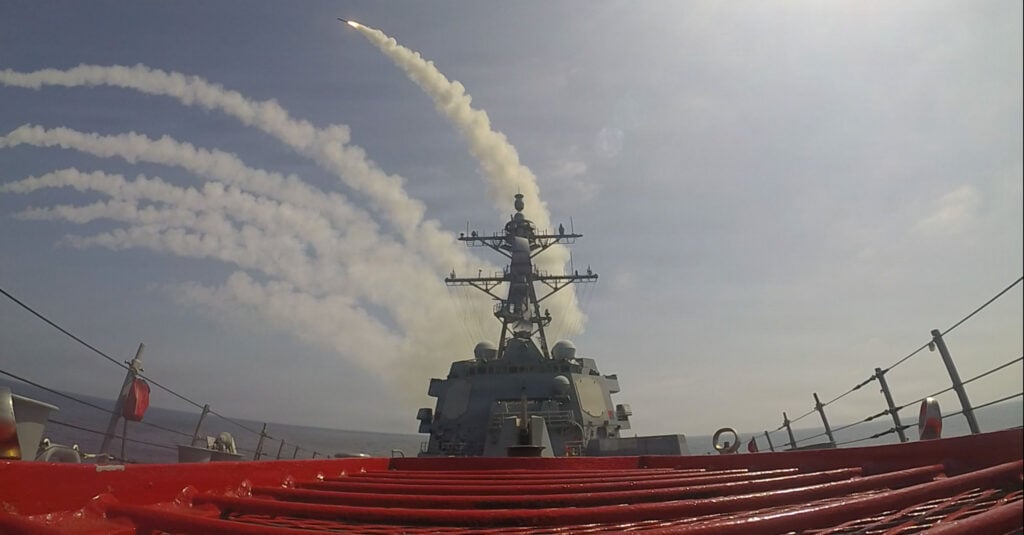
The US entered the conflict with a detailed plan for a war of destruction, but no serious plan for Iran’s war of disruption.
The article's publication in 2026 suggests a retrospective analysis of a recent past conflict, likely highlighting the ongoing strategic shift in military doctrine.
This analysis underscores the evolving nature of warfare, where traditional 'destruction' strategies are becoming insufficient against 'disruption' tactics, particularly relevant for state and non-state actors.
Military powers will need to fundamentally re-evaluate their approaches to conflict, integrating sophisticated counter-disruption strategies alongside conventional warfighting capabilities.
- · Defence Tech innovators in drone/counter-drone systems
- · Asymmetric warfare strategists
- · Nations investing in integrated intelligence and predictive analytics
- · Traditional military-industrial complex focused solely on mass destruction platf
- · Nations with rigid, conventional military doctrines
- · Intelligence agencies focused on kinetic threats over cyber/influence operations
The US military doctrine will undergo a significant review, emphasizing agile, adaptive responses to hybrid threats rather than overwhelming force.
Increased investment in AI, unmanned systems, and cyber warfare capabilities becomes paramount across global defense budgets, pivoting from legacy systems.
This shift could democratize warfare, allowing smaller, technologically adept nations or even non-state actors to effectively challenge larger powers through disruptive tactics, altering global power dynamics.
This signal links to a primary source. Continuum Brief monitors and indexes it as part of the live intelligence stream — we do not republish source content.
Read at Breaking Defense