Itera raises $12 million for fluid circuit board that rewires itself in under a minute
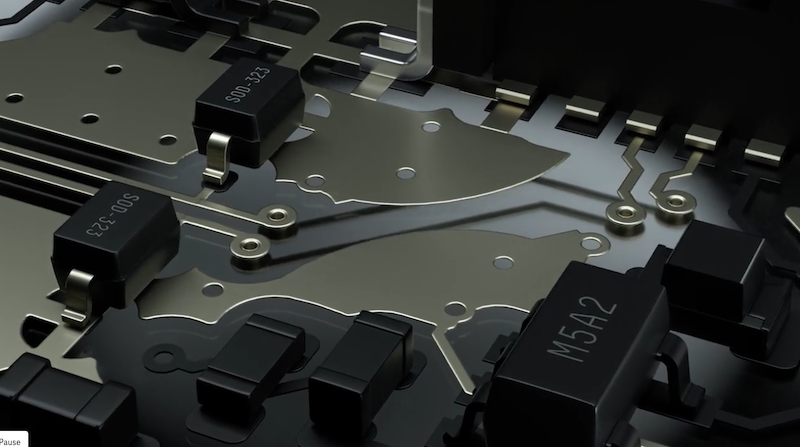
Deep tech startup Itera has emerged from stealth with a prototype of the world’s first fluid circuit board – a technology that allows engineers to rewire and retest physical electronic circuits in less than a minute. The company also announced $12 million in seed funding from Upfront Ventures, Costanoa Ventures, and Colle Capital to launch […]
Miniaturization and advanced materials research have progressed to a point where such fluidic electronic systems are becoming viable outside of labs, coinciding with increasing demands for flexible and reconfigurable hardware. The seed funding indicates investor confidence in transitioning this deep tech from research to practical application.
This innovation offers unprecedented flexibility in hardware design and testing, potentially accelerating prototyping cycles and reducing costs significantly across various electronic industries. It could lead to a paradigm shift in how electronic circuits are developed and deployed.
The ability to rapidly reconfigure physical circuits addresses a key bottleneck in hardware development, moving away from rigid, fixed-function PCBs toward more adaptable and iterative electronic systems. This fundamentally changes the cost-benefit analysis for custom hardware at scale.
- · Electronics R&D
- · Hardware Startups
- · Rapid Prototyping Services
- · Aerospace & Defense
- · Traditional PCB Manufacturers
- · Legacy EDA software reliant on fixed designs
- · Hardware companies with long design cycles
Engineers can iterate on physical circuit designs almost as quickly as software, accelerating R&D and product development timelines.
The cost of custom hardware development may decrease, enabling a wider range of tailored electronic devices for niche applications.
This technology might eventually lead to self-repairing or dynamically reconfigurable systems in critical infrastructure or space applications, enhancing resilience and adaptability.
This signal links to a primary source. Continuum Brief monitors and indexes it as part of the live intelligence stream — we do not republish source content.
Read at Robotics & Automation News