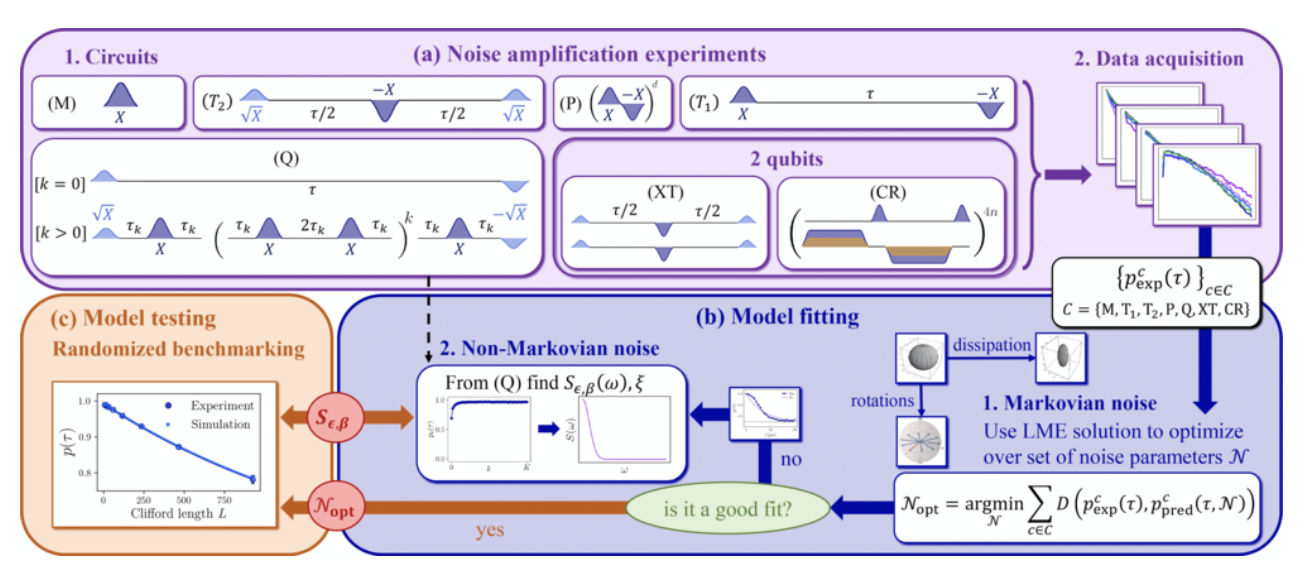
Insider Brief PRESS RELEASE — Researchers from the Johns Hopkins Applied Physics Laboratory (APL) in Laurel, Maryland, and Johns Hopkins University in Baltimore have developed a practical, comprehensive noise-modeling framework for a popular class of superconducting quantum processors. Their work, published in the journal PRX Quantum, offers a sevenfold improvement in predictive accuracy over existing approaches. Quantum […]
The increasing development and practical application of quantum computing necessitate more accurate characterization and mitigation of noise to advance the technology's readiness.
Improved noise modeling is critical for scaling quantum processors, reducing errors, and accelerating the path to fault-tolerant quantum computation, making it more viable for real-world problems.
The ability to more accurately predict and mitigate quantum noise will accelerate the development cycle for superconducting quantum processors, potentially leading to faster breakthroughs in quantum computing applications.
- · Quantum computing developers
- · Semiconductor industry (specialized)
- · Scientific research institutions
- · Companies reliant on less accurate noise models
- · Classical computing for specific tasks
More reliable quantum processor designs and faster iteration in quantum hardware development.
Accelerated development of quantum algorithms and applications for chemistry, materials science, and cryptography.
Potential for early commercialization of specialized quantum computing services due to increased system stability.
This signal links to a primary source. Continuum Brief monitors and indexes it as part of the live intelligence stream — we do not republish source content.
Read at The Quantum Insider