Large Hadron Collider goes offline to make room for its enhanced successor
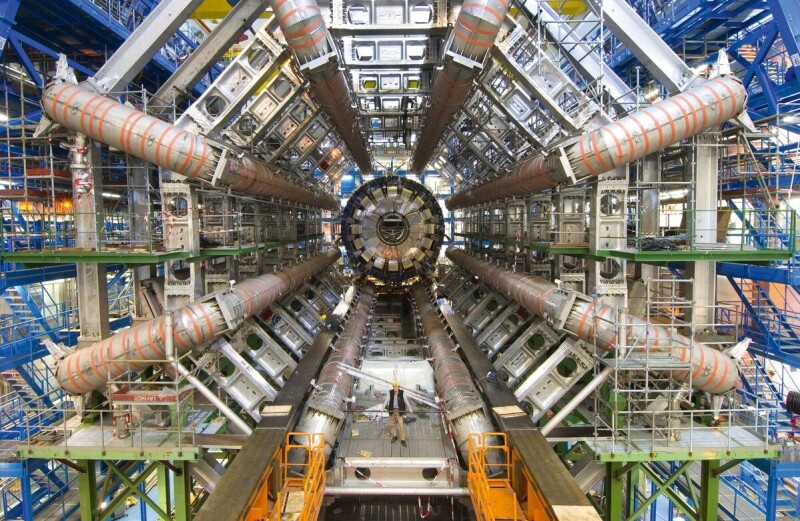
The High-Luminosity LHC will be mostly the same machine, but it'll deliver 10 times the luminosity and just as little chance of destroying the universe - sorry, conspiracy theorists
The planned upgrade of the Large Hadron Collider (LHC) has reached a critical juncture with the shutdown of the existing machine to begin installation of its enhanced successor.
This event signifies a major step forward in fundamental physics research, offering unprecedented opportunities for discovering new particles and understanding the universe's basic laws.
The upgrade will significantly increase the LHC's luminosity, allowing for a higher rate of particle collisions and potentially yielding richer data sets for scientific inquiry.
- · Particle physicists
- · High-energy physics research institutions
- · Developers of advanced detector technologies
- · Conspiracy theorists (humorously noted in the excerpt)
The High-Luminosity LHC (HL-LHC) will, after a period of installation and commissioning, begin operations with significantly higher collision rates.
Increased data volume and collision energy could lead to the discovery of new fundamental particles or insights into dark matter/energy.
Breakthroughs in fundamental physics might inspire new technologies or computational methods, impacting fields beyond pure science over the long term.
This signal links to a primary source. Continuum Brief monitors and indexes it as part of the live intelligence stream — we do not republish source content.
Read at The Register