Laser-driven spintronic memory device switches 1,000 times faster than DRAM —non-volatile device switches in 40 picoseconds while generating almost no heat
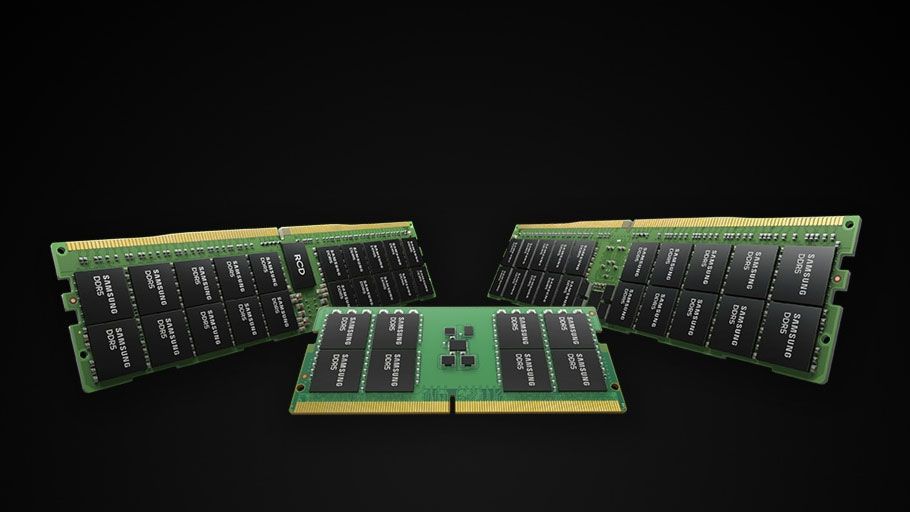
Researchers at the University of Tokyo demonstrated a non-volatile Mn₃Sn magnetic switching device capable of flipping bits in just 40 picoseconds while generating minimal heat, potentially paving the way for lower-power AI hardware and memory systems.
Advances in materials science and spintronics research are enabling breakthroughs in memory technology, driven by the increasing demand for more efficient compute.
This development addresses critical bottlenecks in computing, offering a path to significantly faster, lower-power, and non-volatile memory that can reduce operational costs and expand AI capabilities.
Traditional DRAM and flash memory architectures face a potential disruption from spintronic devices that combine the speed of volatile memory with the data retention of non-volatile storage.
- · AI hardware manufacturers
- · Hyperscale data centers
- · Semiconductor companies
- · High-performance computing (HPC)
- · Traditional DRAM manufacturers
- · Inefficient memory architectures
- · Power-constrained compute applications
Mass adoption of spintronic memory would lead to a reduction in energy consumption for data centers and AI operations.
The improved speed and non-volatility could enable new classes of instantly-on, ultra-efficient computing devices and advanced AI models.
These advancements could shift the balance of power in compute-intensive industries by lowering barriers related to energy and performance.
This signal links to a primary source. Continuum Brief monitors and indexes it as part of the live intelligence stream — we do not republish source content.
Read at Tom's Hardware