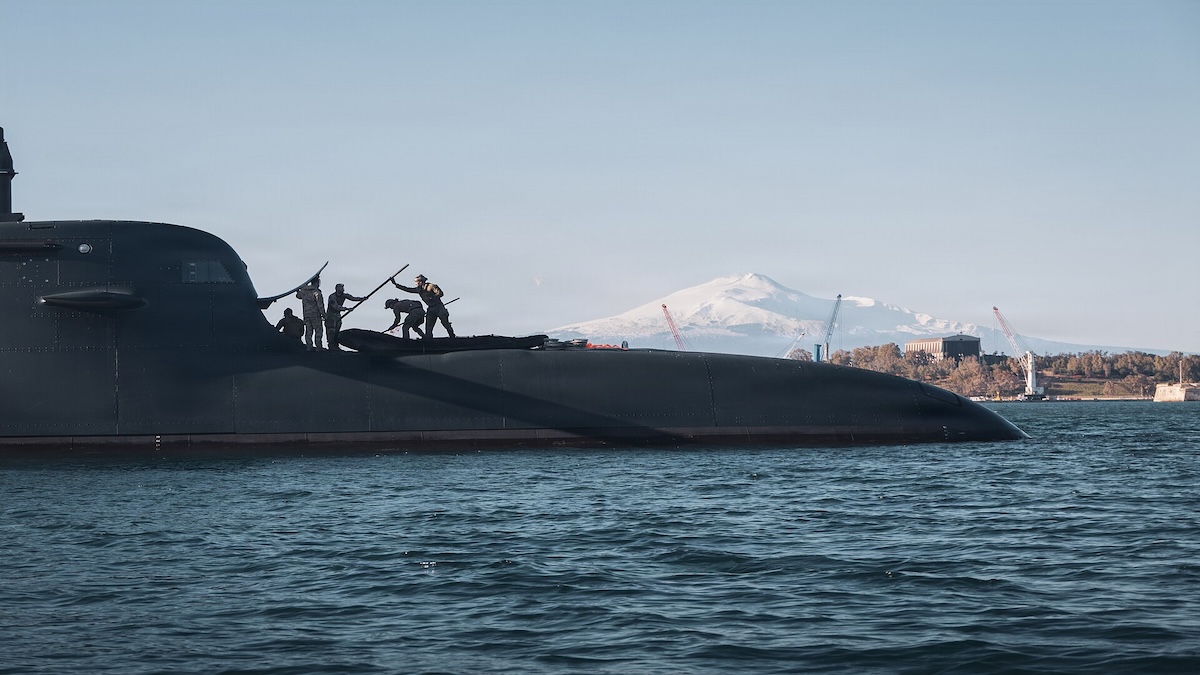
We had been tracking the contact for six hours.The acoustic signature was ambiguous. The geometry was incomplete. The tactical picture had shifted twice in the preceding hour.I ordered battle stations anyway. Not because I was certain, I was not. I ordered it because the decision window was closing. Waiting for certainty was no longer a strategy, it was a risk. That moment — the space between incomplete knowledge and irreversible action — is where submarine command lives. It is where I spent 14 years.Modern militaries have spent decades trying to eliminate that space. Networked sensors, satell
The increasing complexity and proliferation of autonomous systems, coupled with near-peer competition, are forcing militaries to re-evaluate human-machine teaming and decision-making under extreme uncertainty.
This highlights the enduring human element in critical military decision-making, even as technology advances, and the need to design systems that augment rather than replace human judgment in ambiguous situations.
The focus is shifting from eliminating uncertainty through technology towards better preparing commanders to make decisions within uncertainty, emphasizing human intuition and experience.
- · Defence Tech (software, AI for decision support)
- · Military leadership training programs
- · Naval forces (submarines)
- · Legacy C2 systems
- · Overly autonomous military systems without human-in-the-loop
Militaries will invest more in developing AI and data fusion tools that assist human commanders in processing ambiguous information and assessing risk.
This could lead to a rethinking of doctrine and training, prioritizing cognitive resilience and rapid decision-making skills over perfect information acquisition.
A competitive advantage might emerge for nations that successfully integrate human intuition with advanced decision support systems in highly uncertain operational environments.
This signal links to a primary source. Continuum Brief monitors and indexes it as part of the live intelligence stream — we do not republish source content.
Read at War on the Rocks