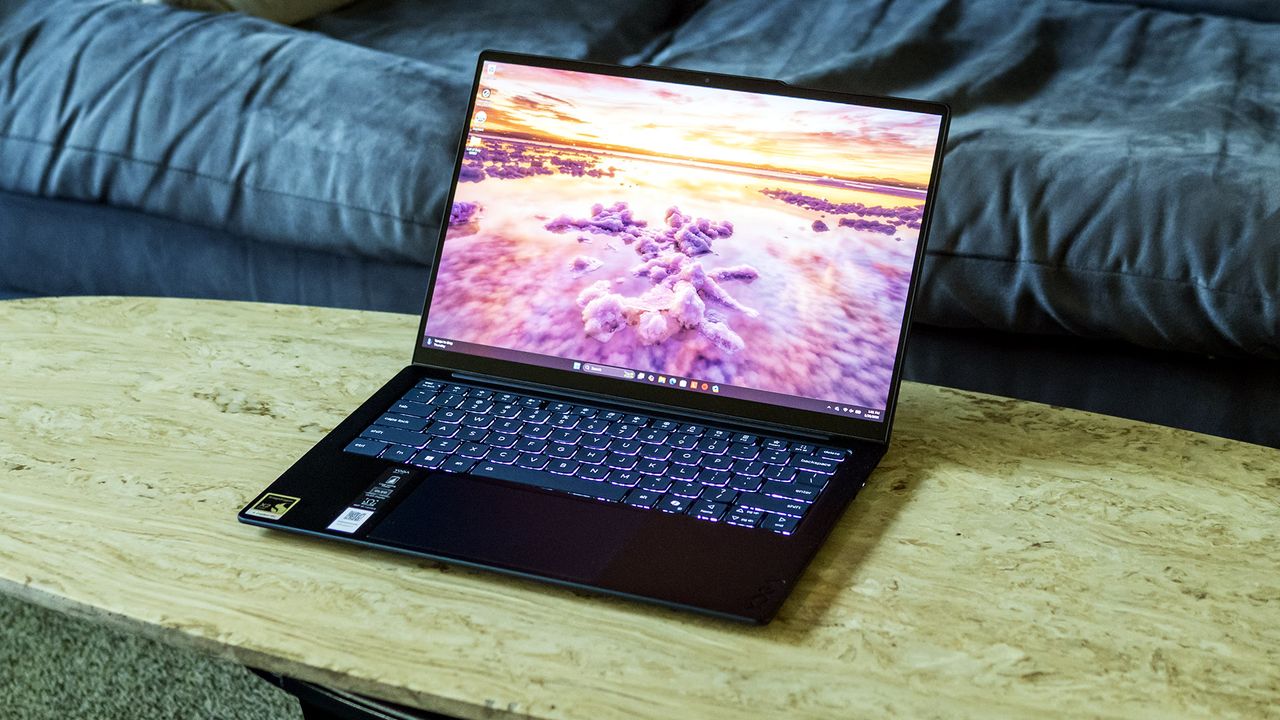
The Yoga Slim 7x brings Snapdragon performance, long battery life, and an OLED display provided you’re fine with ARM apps and USB-C everything.
The release of the Snapdragon X Elite, a major competitor in the ARM-based laptop CPU market, signals a pivotal moment for mobile computing, challenging Intel and AMD's traditional dominance.
This review confirms the viability of ARM architecture for high-performance laptops with significant battery life advantages, pushing the industry towards a more diverse compute landscape.
Intel and AMD now face a credible, power-efficient competitor in the premium laptop segment, forcing them to accelerate their own innovations in power efficiency and integrated AI capabilities.
- · Qualcomm
- · Lenovo
- · ARM ecosystem developers
- · Consumers seeking longer battery life
- · Intel's laptop CPU market share
- · AMD's laptop CPU market share
- · x86-dependent software vendors
- · Traditional laptop form factors dependent on x86 thermals
The market for premium, thin-and-light laptops will see increased competition and innovation, particularly in power efficiency and always-on capabilities.
Software developers will face growing pressure to optimize applications for ARM architecture, potentially leading to a bifurcation of the Windows software ecosystem.
The success of ARM in laptops could eventually spill over into desktop computing or servers, further diversifying the compute supply chain away from x86 monopolies.
This signal links to a primary source. Continuum Brief monitors and indexes it as part of the live intelligence stream — we do not republish source content.
Read at Tom's Hardware